
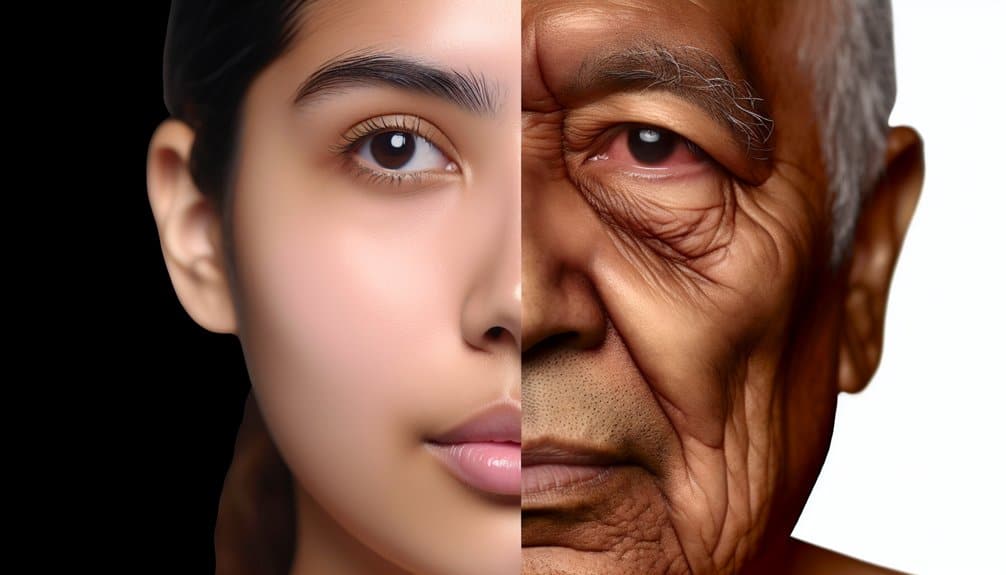
Ever wonder why a good night's sleep seems to make your skin glow? It's because while you rest, your skin gets to work repairing itself. Without enough sleep, though, this process slows down, leading to dullness and early wrinkles. Curious about how sleep impacts your skin's resilience and overall appearance? There's a fascinating link between beauty sleep and youthful skin waiting to be uncovered.
Key Takeaways
- Sleep deprivation reduces collagen production, accelerating the appearance of wrinkles and fine lines.
- Inadequate rest leads to increased skin inflammation, contributing to a less vibrant and youthful complexion.
- Poor sleep diminishes the skin's ability to repair itself, resulting in dullness and uneven texture.
- Lack of sleep weakens the skin barrier, making it more susceptible to environmental damage and aging signs.
- Decreased blood flow during sleep deprivation leads to a dull complexion and accelerates aging.
The Science Behind Sleep and Skin Health
When it comes to understanding the science behind sleep and skin health, it's fascinating how interconnected they are. Your skin, the body's largest organ, goes through a process of skin rejuvenation while you're tucked in bed, thanks to the magic of sleep cycles.
Each cycle plays a vital role, involving stages of deep sleep where cell turnover and repair peak. During this time, your skin efficiently sheds old cells and generates new ones, making it look refreshed and vibrant.
As you drift into deeper sleep stages, your body increases blood flow to the skin, delivering essential nutrients and oxygen that boost its natural glow. This process also helps reduce inflammation and supports collagen production, which keeps your skin firm and elastic.
Maintaining healthy sleep cycles not only rejuvenates your skin but also enhances your overall well-being, helping you wake up looking and feeling your best each day.
How Sleep Deprivation Accelerates Wrinkles and Fine Lines
When you don't get enough sleep, your skin mightn't produce as much collagen, which is essential for keeping wrinkles at bay.
Lack of rest can also lead to increased inflammation, making your skin appear less vibrant.
Plus, your body misses out on the chance to repair and rejuvenate cells efficiently, which can lead to those pesky fine lines becoming more noticeable.
Collagen Production Reduction
Although it mightn't be the first thing that comes to mind, sleep plays an essential role in maintaining youthful, vibrant skin. When you're well-rested, your body works efficiently to produce collagen, a crucial protein responsible for skin elasticity.
However, when you skimp on sleep, collagen production takes a hit, leading to collagen depletion. This reduction affects your skin's ability to bounce back, making wrinkles and fine lines more noticeable.
Think of collagen as your skin's support system. Without enough sleep, this support weakens, and signs of aging become more pronounced.
Prioritizing quality rest not only revitalizes your mind but also promotes healthier skin. By getting those extra hours of sleep, you're giving your skin the best chance to stay supple and youthful.
Increased Skin Inflammation
Just like collagen production, inflammation also plays a significant role in how your skin ages. When you don't get enough sleep, your body's inflammatory response can become overactive, leading to increased skin inflammation.
This isn't just a minor issue; it can accelerate the appearance of wrinkles and fine lines. Your skin barrier, which is essential for protecting against environmental damage, can weaken due to this inflammation.
A strong skin barrier helps retain moisture and ward off irritants, keeping your skin looking youthful and fresh.
Poor Cellular Repair
While it might seem like a minor inconvenience, lack of sleep can considerably disrupt your skin's natural repair processes.
When you don't get enough rest, your body's ability to perform cellular regeneration slows down. This means your skin struggles to repair itself, leading to premature aging, including wrinkles and fine lines.
You can boost your skin's health by prioritizing sleep, which enhances elasticity and youthful appearance.
Here's how sleep deprivation impacts your skin:
- Reduced Cellular Regeneration: Sleep is when your skin cells regenerate; lack of rest hinders this process.
- Loss of Skin Elasticity: Poor sleep affects collagen production, reducing skin firmness.
- Increased Wrinkle Formation: Lack of restorative sleep accelerates wrinkle depth.
- Dull Complexion: Sleep deprivation leads to decreased blood flow, dulling your skin's glow.
Prioritize rest and enjoy radiant skin!
The Role of Sleep in Collagen Production
You'll be glad to know that a good night's sleep is a key player in boosting collagen production, which is essential for maintaining youthful skin.
During sleep, your body naturally ramps up collagen synthesis, helping to keep your skin firm and resilient.
When you prioritize rest, you're not just recharging your mind, but also giving your skin the tools it needs to thrive.
Collagen Synthesis Process
Although you mightn't immediately connect sleep with skincare, getting enough rest plays an essential role in your skin's collagen production.
Sleep is when your body gets busy repairing tissues, including your skin. During this time, collagen synthesis kicks in, helping to counteract collagen degradation that naturally occurs over time.
Here's how sleep supports collagen production:
- Increased Growth Hormone: While you sleep, your body releases more growth hormone, which boosts collagen synthesis.
- Reduced Inflammation: Quality sleep decreases inflammation, which otherwise speeds up collagen breakdown.
- Enhanced Blood Flow: Sleep improves blood circulation, delivering nutrients essential for collagen creation.
- Natural Restoration: Unlike collagen supplements, which are helpful, sleep provides a natural way to maintain youthful skin.
Embrace sleep as your skin's best friend!
Sleep and Collagen Levels
As you consider the role of sleep in maintaining healthy skin, the connection to collagen levels becomes increasingly clear. During sleep, your body enters various sleep cycles, essential for collagen production. These cycles allow your skin to repair and rejuvenate, slowing down collagen degradation and promoting a youthful appearance. A consistent sleep routine can greatly enhance your skin's resilience.
| Sleep Cycle | Role in Collagen Production | Impact on Skin |
|---|---|---|
| REM | Cellular repair | Glowing skin |
| Deep Sleep | Collagen synthesis boost | Firm texture |
| Light Sleep | Prepares for deeper cycles | Relaxed look |
Prioritizing quality rest not only supports overall wellness but also plays an important role in maintaining your skin's structure and elasticity. By cherishing your sleep, you're investing in a radiant, healthy complexion!
Effects of Collagen Deficiency
When your skin lacks sufficient collagen, its effects become noticeable in the form of fine lines, wrinkles, and loss of elasticity.
This collagen depletion may seem intimidating, but understanding the role of sleep in collagen production can be incredibly empowering. By ensuring you get adequate rest, you can support your skin's natural ability to regenerate and maintain elasticity.
Here's how you can tackle collagen deficiency:
- Prioritize Sleep: Aim for 7-9 hours per night to boost collagen production naturally.
- Stay Hydrated: Drinking water helps maintain skin elasticity, giving you a youthful glow.
- Balanced Diet: Include vitamin C and amino acids to support collagen synthesis.
- Use Skincare Products: Opt for products that promote collagen production and improve skin texture.
Embrace these steps, and watch your skin transform!
Sleep Loss and Its Effect on Skin Hydration
You might be surprised to learn just how much sleep affects your skin's hydration. When you don't get enough rest, your hydration levels can drop, leaving your skin feeling dry and less supple.
A good night's sleep helps your body maintain moisture retention, keeping your skin plump and radiant. Think of sleep as your skin's natural moisturizer.
When you're well-rested, your body better regulates water balance, ensuring your skin stays hydrated. Lack of sleep, on the other hand, disrupts this balance, leading to dull and thirsty skin.
Increased Sensitivity to Environmental Stressors
While a good night's sleep helps keep your skin hydrated, it also plays an essential role in shielding your skin from environmental stressors.
When you're well-rested, your skin barrier is stronger, making it less susceptible to damage from environmental pollutants. Lack of sleep can make your skin more sensitive, leaving it vulnerable to the harsh elements around you.
Here's how sleep deprivation affects your skin's ability to fend off these stressors:
- Weakened Skin Barrier: Without adequate rest, your skin loses its ability to protect against environmental pollutants effectively.
- Increased Inflammation: Sleep deprivation can cause inflammation, making your skin more reactive to irritants.
- Reduced Repair: Your skin repairs itself at night, so missing sleep means missing out on essential recovery time.
- Accelerated Aging: Over time, increased sensitivity can lead to premature aging, as pollutants more easily penetrate your skin.
Prioritize sleep to keep your skin resilient and glowing!
The Impact of Lack of Sleep on Skin Tone and Texture
A lack of sleep can subtly alter your skin tone and texture, leading to noticeable changes over time. When you don't get enough rest, your skin might start to look a little dull or uneven. This is because sleep is when your body works hard to repair itself, including your skin.
Without sufficient sleep, your skin tone can lose its natural glow, and the texture may not feel as smooth or supple as you'd like. Your skin needs those restful hours to rejuvenate and maintain its importance.
When you're well-rested, your skin tends to look more vibrant and even. A good night's sleep helps support healthy blood flow and the production of collagen, which keeps your skin firm and radiant.
Strategies for Improving Sleep to Promote Skin Vitality
Anyone seeking vibrant skin knows that improving your sleep quality is a game-changer.
Prioritizing sleep hygiene can enhance your skin's health. Start by establishing a calming bedtime routine and embrace relaxation techniques to unwind and manage stress effectively.
Here are some strategies to help you:
- Mindfulness Practices: Incorporate mindfulness before bed to ease your mind and improve sleep quality.
- Nutritional Support: Consume a balanced diet rich in nutrients and prioritize hydration to support skin health.
- Screen Time: Limit exposure to screens an hour before bed to enhance melatonin production and improve your sleep environment.
- Exercise Benefits: Regular physical activity can boost sleep quality, helping you wake up refreshed and your skin glowing.
Conclusion
Think of your skin as a delicate tapestry, woven with threads of collagen and vibrancy. Just as a painter needs a steady hand, your skin relies on restful sleep to maintain its youthful glow. When you don't get enough rest, the tapestry frays, showing signs of wear like wrinkles and dullness. Prioritize your sleep, and you'll see the colors of liveliness return to your canvas, helping you face each day with a fresh, radiant outlook.

Add Comment