
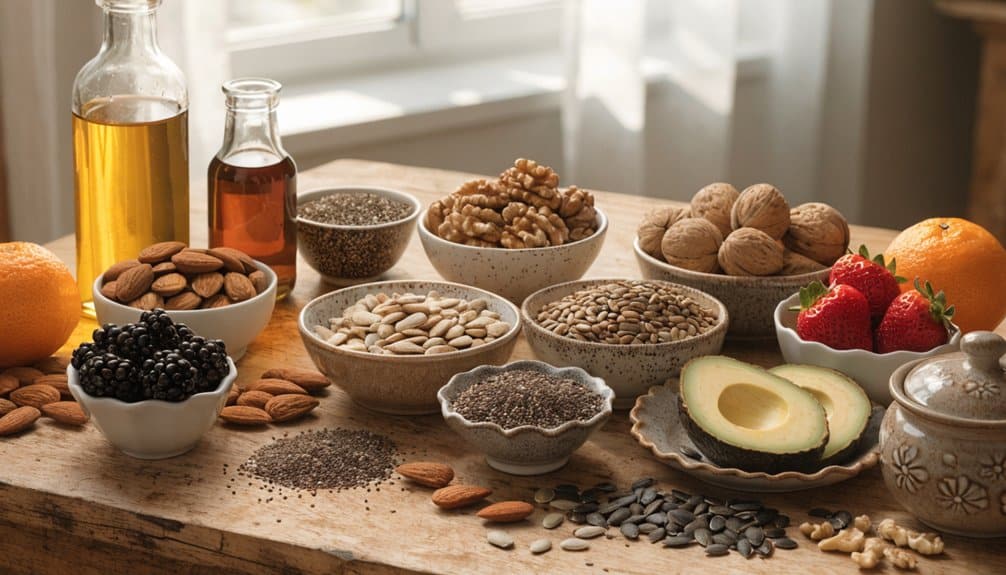
You may not know that the fats in nuts and seeds can influence cell membrane function, inflammation, and even how well your brain ages. When you eat them regularly, you’re getting a compact source of unsaturated fats, fiber, magnesium, vitamin E, and polyphenols that support heart, skin, and metabolic health. The effect isn’t just theoretical, and some choices offer more targeted benefits than others.
Key Takeaways
- Nuts and seeds provide unsaturated fats, fiber, vitamins, minerals, and antioxidants that support healthy aging and overall nutrient density.
- Walnuts, chia, and flax supply omega-3s, while almonds provide vitamin E for heart, brain, and skin health.
- Their fiber, plant sterols, magnesium, and potassium can improve cholesterol, blood pressure, and endothelial function.
- Polyphenols, lignans, and vitamin E help reduce oxidative stress and chronic inflammation linked to cognitive and cardiovascular aging.
- Easy additions like trail mix, yogurt toppings, smoothies, salads, and nut butters make anti-aging nutrition practical and sustainable.
Best Nuts for Healthy Aging

Because nutrient density matters more with age, the best nuts for healthy aging are those that consistently deliver unsaturated fats, fiber, plant protein, vitamin E, magnesium, and polyphenols in meaningful amounts. Among nut varieties, walnuts, almonds, pistachios, and pecans stand out for strong nutrient profiles and documented health benefits.
You’ll support cardiometabolic function, muscle maintenance, and oxidative balance when you use nuts strategically. Walnuts provide alpha-linolenic acid; almonds emphasize vitamin E; pistachios contribute potassium and carotenoids; pecans supply abundant polyphenols. These nutrients may help moderate aging effects linked to inflammation, vascular decline, and insulin resistance. Practical dietary recommendations favor unsalted forms and measured portion sizes of about one ounce daily. As snack options, nuts are convenient, and their culinary uses extend to yogurt, salads, oatmeal, and savory grain dishes. By incorporating these nuts into your routine, you can naturally support stronger immunity and long-term health maintenance as part of a broader anti-aging nutrition strategy.
Best Seeds for Healthy Aging
When you add seeds to your routine, you can increase fiber, unsaturated fats, minerals, and antioxidants that support healthy aging. Chia seeds help you boost omega-3s and soluble fiber, flaxseeds provide lignans and ALA linked to longevity support, and pumpkin seeds give you magnesium, zinc, and plant protein for metabolic and cellular health. Used consistently, these nutrient-dense seeds can strengthen the nutritional foundation of your anti-aging diet. Choosing seeds rich in unsaturated fats may help support a healthier LDL/HDL ratio, which is linked to reduced cardiovascular risk as you age.
Chia Seeds Benefits
Tiny but metabolically impressive, chia seeds deliver a nutrient profile that aligns well with healthy aging: they’re rich in fiber for glycemic control and gut health, provide plant-based omega-3s in the form of ALA to support cardiovascular function, and supply minerals like calcium, magnesium, and phosphorus that help maintain bone and muscle health.
| Benefit | Why it matters |
|---|---|
| Fiber | Supports satiety, bowel regularity |
| ALA omega-3s | Helps maintain heart health |
In practical chia seed nutrition, you’ll also get modest protein and polyphenols that may help counter oxidative stress. Because chia absorbs fluid, it can improve texture and fullness in yogurt, oats, and chia seed recipes without added sugar. For best tolerance, hydrate seeds well and increase intake gradually with water.
Flaxseeds For Longevity
Although they’re small, flaxseeds are among the best seeds for healthy aging because they combine viscous fiber, plant omega-3s, and lignans in a profile that supports cardiovascular, metabolic, and digestive health. You’ll get the strongest flaxseed benefits when you choose ground flaxseed meal, since whole seeds often pass undigested. In flaxseed nutrition, ALA supports heart health, while lignans may help modulate oxidative stress.
You can add flaxseed to yogurt, oats, flaxseed smoothies, or simple flaxseed recipes without changing flavor much. Flaxseed oil provides ALA but not fiber or lignans, so it’s less complete for flaxseed health. Compare flaxseed varieties by color and freshness, prioritize airtight flaxseed storage, and use flaxseed supplements only when food-first intake isn’t practical for you daily.
Pumpkin Seeds Nutrition
Pumpkin seeds stand out among the best seeds for healthy aging because they deliver a dense mix of magnesium, zinc, iron, protein, and unsaturated fats that support cardiovascular, metabolic, immune, and musculoskeletal health.
Their nutritional profile also includes phytosterols and antioxidants linked to reduced inflammation and improved lipid balance. You’ll get the strongest health benefits by keeping portion sizes to about one ounce, which supports satiety without excess calories. For culinary uses, add pumpkin seeds to yogurt, salads, soups, or grain bowls. Simple roasting methods, such as low-temperature dry roasting, help preserve fats better than high heat. When comparing sourcing options, choose unsalted, minimally processed seeds when possible. For storage tips, keep them in an airtight container away from heat and light to limit oxidation and maintain freshness longer.
Why Nuts and Seeds Support Healthy Aging
Because aging is closely tied to cumulative oxidative stress, chronic low-grade inflammation, and gradual losses in muscle, bone, and metabolic resilience, nuts and seeds can play a meaningful role in healthy aging by delivering a dense package of unsaturated fats, plant protein, fiber, magnesium, potassium, vitamin E, and polyphenols. Their nutrient density helps you support the aging process with steady energy, glycemic control, satiety, and cardiometabolic balance. Across nut varieties and seed types, consistent intake is associated with health benefits when used as practical dietary sources. You can build them into meal planning through simple culinary uses like topping yogurt, salads, or cooked grains. They also work as convenient snack options, though portion control matters because calories add up quickly. Regular inclusion can improve overall diet quality and long-term adherence. In particular, nuts and seeds rich in omega-3 fats and monounsaturated fats may further support healthy aging by promoting heart health and helping maintain favorable cholesterol levels.
Anti-Aging Nutrients in Nuts and Seeds

When you look at nuts and seeds through an anti-aging lens, their value comes from a compact mix of nutrients that directly supports cellular defense, vascular health, metabolic function, and tissue maintenance. You benefit from exceptional nutrient density, including vitamin E, selenium, magnesium, zinc, and copper, which strengthen antioxidant capacity and enzyme activity. Their healthy fats, especially monounsaturated and omega-3 fats, help preserve membrane integrity, support skin hydration, and moderate inflammatory signaling. In line with healthy diet guidelines that emphasize unsaturated fats and plant-based foods, regularly eating nuts and seeds can contribute to cardiovascular disease risk reduction as part of an overall balanced pattern.
You also get plant based proteins and notable fiber content, both of which improve glycemic control and satiety. These foods deliver essential minerals needed for collagen formation, mitochondrial function, and neuromuscular balance. Their anti inflammatory properties may help reduce oxidative stress, while heart healthy benefits and cognitive enhancement reflect broad systemic support with aging overall.
How Nuts and Seeds Help Heart Health
Several cardioprotective mechanisms explain why nuts and seeds are consistently linked with better heart health. When you eat them regularly, you increase intake of unsaturated fats, especially monounsaturated and omega-3 fats, which can help lower LDL cholesterol and triglycerides. Many varieties also provide fiber, plant sterols, arginine, magnesium, and potassium, nutrients associated with improved endothelial function, blood pressure regulation, and reduced inflammation. These nutritional effects translate into meaningful cardiovascular benefits. Replacing refined snacks or processed meats with almonds, walnuts, pistachios, chia, flax, or pumpkin seeds may improve lipid profiles and support healthier vascular tone. Because nuts and seeds are also rich in antioxidants such as vitamin E and polyphenols, they can help limit oxidative stress that contributes to atherosclerosis, supporting long-term heart health with aging. Building an overall lifestyle that combines regular nut and seed consumption with consistent physical activity further supports cardiovascular health and reduces the risk of heart disease over time.
How Nuts and Seeds Support Brain Health
You can support brain health with nuts and seeds because they provide omega-3 fats that are linked to better memory and healthier neuronal membranes. You also get antioxidants, such as vitamin E and polyphenols, that help protect neurons from oxidative stress associated with cognitive aging. In addition, minerals like magnesium and zinc support neurotransmitter function, synaptic signaling, and overall cognition. Vitamin E from nuts and seeds, particularly the biologically active alpha-tocopherol, has been associated in population studies with a lower incidence of cognitive decline and dementia.
Omega-3s And Memory
Because the brain is rich in fat and metabolically demanding, the quality of the fats you eat can influence how well it functions over time. Nuts and seeds, especially walnuts, flaxseeds, chia seeds, and hemp seeds, provide alpha-linolenic acid, a plant omega-3 linked with healthy neuronal membranes and signaling.
When you regularly include these foods, you support processes involved in learning and recall. Although conversion of ALA to EPA and DHA is limited, intake still contributes to overall omega-3 status and complements other dietary sources. Clinically, omega 3 benefits include support for cerebral blood flow, synaptic activity, and inflammatory balance, all relevant to memory enhancement. Pairing seeds and nuts with a balanced diet may help preserve cognitive performance as you age, especially when intake is consistent over months.
Antioxidants Protect Neurons
While omega-3 fats help maintain membrane structure, antioxidants in nuts and seeds protect neurons from oxidative stress, a key driver of cognitive aging. Vitamin E in almonds, sunflower seeds, and hazelnuts helps limit lipid peroxidation in neuronal membranes, supporting neuron protection as you age.
Polyphenols and lignans in walnuts, pecans, sesame, and flaxseeds further strengthen cellular defense systems. These compounds help neutralize reactive oxygen species, reduce inflammatory signaling, and preserve mitochondrial function, all of which matter for cognitive enhancement. When you regularly include antioxidant-rich nuts and seeds in your diet, you’re giving brain cells nutrients linked with better resilience, synaptic efficiency, and healthier aging trajectories. Clinically, this matters because lower oxidative burden is associated with slower cognitive decline and better preservation of everyday mental performance over time.
Minerals For Cognition
Beyond antioxidant defense, nuts and seeds also supply minerals that help keep cognitive systems working efficiently. Magnesium supports synaptic signaling, zinc helps memory formation, and iron assists oxygen delivery to brain tissue. When you eat pumpkin seeds, almonds, and sesame regularly, you’re supporting neurotransmitter balance and steady energy production linked with cognitive enhancement.
| Mineral | Key role | Food source |
|---|---|---|
| Magnesium | Synaptic function | Almonds |
| Zinc | Memory support | Pumpkin seeds |
These minerals also influence nutrient absorption and enzyme activity, which affects attention, processing speed, and resilience during aging. Clinical evidence suggests that suboptimal mineral intake can impair cognition over time, so including varied nuts and seeds in your meals is a practical, nutrient-dense strategy for maintaining brain health.
How Nuts and Seeds Benefit Skin, Hair, and Bones

Beauty starts at the cellular level, and nuts and seeds supply several nutrients your skin, hair, and bones rely on to stay resilient with age. Vitamin E in almonds and sunflower seeds supports skin hydration and helps limit oxidative stress from daily UV exposure. Zinc, selenium, and protein in pumpkin seeds and sesame promote collagen production, hair strength, and efficient nutrient absorption. Calcium, magnesium, phosphorus, and vitamin K in sesame and chia help maintain bone density and support normal bone remodeling. Healthy fats, especially omega-3s in walnuts and flax, aid hormonal balance, which can influence skin texture and hair quality. By supporting overall health and reducing oxidative stress, nuts and seeds can complement a balanced diet and targeted skin care routine to help maintain skin integrity and slow visible aging over time. Together, these nutrients work synergistically, giving you clinically meaningful support for visible aging while also contributing to gentle inflammation reduction over time naturally.
How Nuts and Seeds May Reduce Inflammation
Because low-grade chronic inflammation tends to rise with age, adding specific nuts and seeds to your diet can help moderate it through well-studied nutrients and bioactive compounds. You benefit from vitamin E, magnesium, polyphenols, fiber, and unsaturated fats that influence inflammatory signaling, oxidative stress, and endothelial function. Walnuts and flaxseeds provide ALA omega-3s, which support healthier cytokine balance. Almonds, sunflower seeds, and hazelnuts deliver antioxidant compounds with notable anti inflammatory properties, helping protect cell membranes from oxidative damage. Pumpkin seeds contribute magnesium and phytosterols linked to improved immune regulation. Meanwhile, fiber from nuts and seeds helps nourish beneficial gut microbes, which may further support chronic inflammation reduction through short-chain fatty acid production. Together, these mechanisms can help you maintain a more resilient internal environment as you age. By supporting vascular health, antioxidant defenses, and immune balance, regular nut and seed intake may also play a role in lowering the long-term risk of diet-related malnutrition that contributes to undernutrition and overnutrition in older adults.
How Many Nuts and Seeds Should You Eat?
To get these anti-inflammatory and age-supportive benefits without overshooting calories, aim for about 1 ounce of nuts or seeds per serving, which is roughly a small handful of nuts or 1 to 2 tablespoons of seeds.
- For most adults, daily recommendations fit within one to two servings.
- Follow nut portion sizes closely if you’re watching weight or blood sugar.
- Prioritize unsalted, minimally processed options to limit excess sodium and oils.
- Rotate varieties to broaden intake of vitamin E, magnesium, selenium, fiber.
This amount supplies beneficial fats and micronutrients linked with healthier lipid profiles, glycemic control, and oxidative stress balance. If you have higher calorie needs, you may tolerate more, but moderation still matters. If you have kidney issues or allergies, ask your clinician.
Easy Ways to Eat More Nuts and Seeds
You can raise your intake of nuts and seeds with practical changes that improve nutrient density without adding much effort. Try smart snack swaps like replacing chips or sweets with a measured handful of almonds, pistachios, or pumpkin seeds, and make simple meal additions by sprinkling chia, flax, or sesame onto yogurt, oats, salads, or cooked vegetables. Quick prep ideas, such as portioning trail mix in advance or keeping nut butter and ground seeds on hand, can help you consistently add fiber, unsaturated fats, plant protein, magnesium, and vitamin E to your routine. Choosing nuts and seeds as regular snacks can support a healthy diet that benefits both long-term health and the environment by emphasizing plant-based foods.
Smart Snack Swaps
When snack choices are built around nutrient density, it becomes much easier to increase your intake of nuts and seeds without feeling like you’re following a strict plan. These swaps can improve fiber, unsaturated fats, magnesium, vitamin E, and plant protein, all nutrients linked with healthier aging and better metabolic resilience.
- Choose nut snacks over chips, or try roasted seed mixes for crunch.
- Replace candy with energy ball recipes made from dates, oats, and seeds.
- Use nut butter alternatives or nut based dips instead of sugary spreads or processed cheese.
- Keep trail mix variations, seed smoothies, or cleaner protein bars available for convenience.
You’ll support satiety, steadier blood sugar, and lower oxidative stress while making snacking more intentional, practical, and nutritionally protective over time.
Simple Meal Additions
Beyond snacks, meals offer even more consistent opportunities to increase nuts and seeds without changing your routine much. You can use nut butter on toast or fruit for vitamin E, magnesium, and healthy fats that support skin and vascular aging. Add smoothie boosters like chia, flax, or hemp for fiber and omega-3s.
Try salad toppings such as walnuts, pumpkin seeds, or sesame for polyphenols and minerals. Stir oatmeal mix ins and yogurt add ins into breakfasts, or sprinkle nuts over breakfast cereals. In savory dishes, almonds, cashews, or tahini can improve satiety and nutrient density. Use trail mix in measured portions alongside meals, and reserve energy bites or dessert toppings for balanced options when you want something sweet. These additions help you raise antioxidant intake without overhauling your eating pattern.
Quick Prep Ideas
Although convenience often drives food choices, quick prep methods can make nuts and seeds a realistic daily source of unsaturated fats, fiber, vitamin E, magnesium, zinc, selenium, and plant polyphenols linked to healthier aging.
- Stir nut butter into breakfast bowls or yogurt parfaits for satiety and steadier glycemic response.
- Portion trail mixes with walnuts, pumpkin seeds, and dried fruit for portable savory snacks between meals.
- Blend chia, flax, or hemp as smoothie boosters, or shape them into energy bites for efficient nutrient density.
- Use almonds and sesame as salad toppings, baking ingredients, or homemade granola to raise mineral and antioxidant intake.
You can also keep roasted seeds visible for easy snacking. These quick habits support cardiometabolic health, skin integrity, and cellular defense with minimal prep time daily.
Frequently Asked Questions
Can Nuts and Seeds Interact With Anti-Aging Medications or Supplements?
Yes, they can. You should watch for medication interactions, since nuts and seeds may alter nut absorption, affect fat-soluble supplements, or potentiate anticoagulants. You’ll benefit from checking labels and asking your clinician or pharmacist.
Are Roasted Nuts and Seeds as Beneficial as Raw Ones?
Yes—if you’re testing the theory, roasted nuts and seeds can be nearly as beneficial as raw ones; raw versus roasted mainly affects nutrient retention, with gentle dry roasting preserving most healthy fats, minerals, and antioxidants.
Which Nuts and Seeds Are Safest for People With Allergies?
No nuts or seeds are universally safest if you’ve got allergies; you should get allergy testing first. Based on results, safe alternatives may include tolerated seeds like chia or flax, introduced cautiously under clinical guidance.
How Should Nuts and Seeds Be Stored to Prevent Spoilage?
Store nuts and seeds in airtight storage containers, preferably refrigerated or frozen, to limit oxidation, moisture, and microbial growth. You’ll preserve fats, vitamin E, and minerals better. During nut selection, choose fresh, unsalted, odor-free products.
Are Nuts and Seeds Suitable for Low-Carb or Keto Diets?
Yes—like a hiker packing dense fuel, you’ll find many nut varieties fit low-carb plans; pecans and macadamias are keto friendly options, often under 5 grams net carbs per ounce, while delivering fats, fiber, and minerals.

Add Comment