
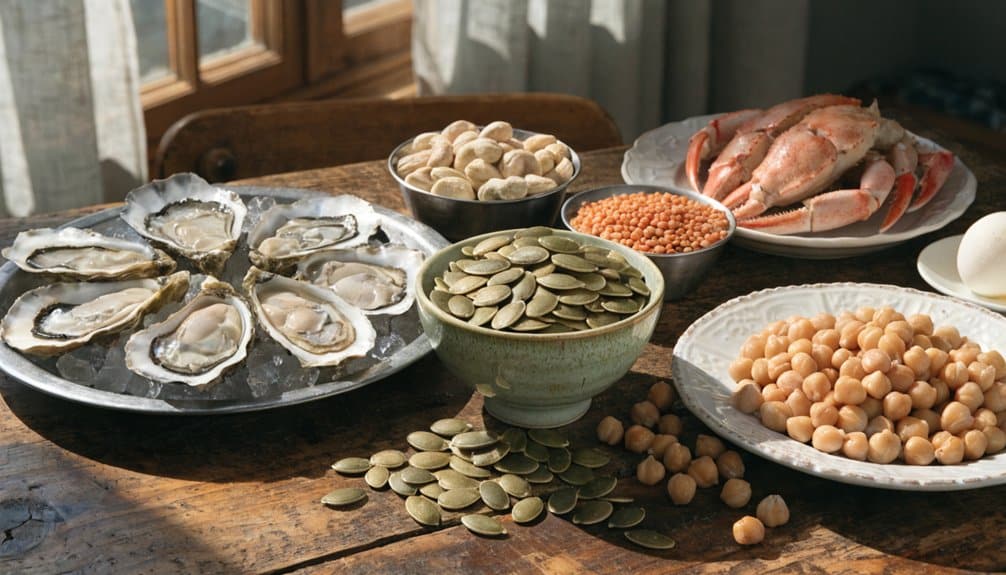
When your skin is under stress, zinc becomes a quiet workhorse. You need it for collagen formation, immune defense, and wound repair, so low intake can slow recovery. Foods like oysters, beef, poultry, beans, pumpkin seeds, and nuts can help you meet your needs through diet. But zinc content isn’t the only factor—absorption, daily requirements, and food choices can change how well your skin responds.
Key Takeaways
- Zinc supports collagen production, immune defense, and controlled inflammation, helping wounds heal faster and new skin form stronger.
- Oysters, shellfish, beef, and lamb are top zinc-rich foods, providing highly bioavailable zinc and protein for recovery.
- Chickpeas, lentils, pumpkin seeds, sunflower seeds, cashews, and oats add zinc while also supplying fiber and other nutrients.
- Soaking, sprouting, or fermenting plant foods can improve zinc absorption by lowering phytates that block mineral uptake.
- Aim for 8 mg daily for women and 11 mg for men, and avoid exceeding 40 mg from food and supplements.
Top Zinc Foods for Skin Repair

Because zinc is required for collagen formation, immune defense, and wound healing, getting enough from food can directly support your skin’s ability to repair itself. Prioritize oysters, which provide the highest zinc density, then beef, lamb, crab, and sardines. If you prefer plant-based options, use pumpkin seeds, hemp seeds, lentils, chickpeas, cashews, and fortified cereals. You can further support repair by pairing zinc-rich foods with sources of omega-3 fats such as salmon, sardines, walnuts, flaxseed, or chia seeds to help reduce inflammation.
You’ll absorb zinc more efficiently from animal foods, but balanced meals can still help you meet needs. Pair legumes or whole grains with soaking, sprouting, or fermentation to reduce phytates that limit absorption. If you’ve noticed zinc deficiency symptoms like poor appetite, slow wound closure, or frequent infections, review your intake first. Food should be your foundation, while zinc supplementation benefits are usually most relevant when intake or status is clearly inadequate.
Why Zinc Helps Skin Heal
Zinc helps your skin heal because it supports cell growth, protein synthesis, and tissue repair after damage. It also helps regulate your immune response, which can lower infection risk and keep wound healing on track. If your zinc intake is low, your skin may repair more slowly and with less efficiency.
Zinc And Tissue Repair
When your skin is repairing after a cut, breakout, or irritation, it relies on zinc to support several core steps in tissue recovery. You need it for cell division, collagen formation, and controlled inflammation, all of which help close damaged skin efficiently. If zinc absorption is poor or zinc deficiency develops, repair can slow and barrier strength may weaken.
| Repair step | Zinc’s role | Practical impact |
|---|---|---|
| Cell growth | Supports DNA synthesis | Faster resurfacing |
| Collagen | Aids protein production | Stronger new tissue |
| Re-epithelialization | Helps keratinocyte migration | Quicker closure |
| Antioxidant defense | Limits oxidative stress | Less secondary damage |
To support repair, you should include absorbable zinc sources regularly, especially during periods of active healing.
| Enzyme activity | Drives remodeling | Better texture |
Supports Immune Response
Although skin repair is often discussed regarding collagen and cell turnover, your immune response is just as important, and zinc helps regulate it at each stage of healing. It supports white blood cell activity, cytokine signaling, and antimicrobial defense, all core immune system functions needed to limit infection and clear damaged tissue.
If your zinc intake is low, wounds may stay inflamed longer and close more slowly. Getting zinc from foods like oysters, beef, pumpkin seeds, and lentils can help maintain balanced immunity while your skin recovers. In clinical settings, zinc supplementation benefits are most relevant when deficiency is present or risk is high, such as during poor intake, malabsorption, or chronic wounds. You shouldn’t assume more is better, but adequate zinc gives your immune response what it needs.
Animal Foods High in Zinc for Skin Repair
Because your body absorbs zinc from animal foods more efficiently than from most plant sources, these options can be especially useful if you’re trying to support skin repair after irritation, breakouts, or minor wounds. Prioritize these zinc sources if you want measurable zinc benefits for recovery:
- Oysters and shellfish: Among the richest options, they can help you meet needs quickly when intake has been low.
- Beef and lamb: These provide highly bioavailable zinc plus protein, which your skin also needs for tissue rebuilding.
- Eggs, dairy, and poultry: Useful everyday choices that add moderate zinc and fit easily into regular meals.
If you’re healing slowly, rotating several animal foods through the week may support intake more consistently. Keep portions balanced, especially if you’re also watching saturated fat, sodium, or overall calories. Athletes who rely heavily on these animal foods for zinc may also want to consider their overall vitamin and mineral needs—especially nutrients like iron and B vitamins that support energy, oxygen transport, and recovery.
Plant Foods Rich in Zinc for Skin Repair
Plant foods can also help support skin repair, even though the zinc they contain isn’t absorbed as efficiently as zinc from animal sources. You can still use them to strengthen overall intake, especially if you eat little or no meat. Reliable options include legumes, nuts, seeds, and whole grains. Among the better choices, sunflower seeds provide zinc along with vitamin E and healthy fats that support the skin barrier. Chickpeas add zinc, protein, and fiber, making them a practical staple for recovery-focused meals. Lentils, pumpkin seeds, cashews, and oats also contribute meaningful amounts. If you’re healing from irritation, breakouts, or minor wounds, adding several zinc-containing plant foods across the day can help you meet your needs more consistently while supporting tissue maintenance and repair over time. Adequate zinc intake from these plant foods can complement broader weight management strategies by supporting overall health during intentional weight loss or maintenance.
How to Absorb More Zinc From Food

If you want to get more zinc from food, focus on both the source and the meal pattern around it. Animal proteins generally provide zinc with higher absorption, while plant sources may contain phytates that reduce uptake. You can improve intake with simple, evidence-based zinc absorption techniques. Pairing zinc-rich foods with healthy dietary fats can also support the absorption of fat-soluble vitamins that are important for skin repair.
- Pair zinc-rich foods with protein, which can support absorption and enhancing zinc bioavailability.
- Soak, sprout, ferment, or leaven beans, grains, and seeds to lower phytates and improve mineral release.
- Avoid taking high-dose iron or calcium supplements with zinc-rich meals, since they may compete for absorption.
You’ll also do better by spreading zinc intake across meals instead of relying on one large serving. Consistency matters more than occasional high-zinc foods for skin repair and wound recovery over time.
How Much Zinc You Need Each Day
How much zinc do you actually need each day for skin repair? For most adults, daily zinc recommendations are 8 mg for women and 11 mg for men. During pregnancy and lactation, your needs rise to 11 to 12 mg. These targets support immune function, collagen formation, and wound healing, all central to skin recovery.
If your intake stays low, zinc deficiency symptoms can include slow healing, dry or inflamed skin, acne-like eruptions, hair shedding, and reduced taste or appetite. You shouldn’t routinely exceed 40 mg daily from food and supplements combined unless your clinician advises it, because excess zinc can impair copper status and cause nausea or abdominal pain. If you have digestive disease, restrictive eating, or frequent wounds, ask your clinician whether testing makes sense.
Frequently Asked Questions
Can Zinc-Rich Foods Interact With Acne or Skincare Medications?
Yes, you can experience medication interactions, though zinc-rich foods usually pose low risk. You should monitor zinc absorption, especially with tetracycline or quinolone antibiotics, isotretinoin, or supplements, and separate intake when your clinician advises it.
Are Zinc Supplements Better Than Food for Skin Recovery?
Usually not—unless you’re deficient. Evidence suggests zinc absorption from supplements isn’t inherently better than dietary sources for skin recovery. You’ll typically benefit more from food first; use supplements when testing, intake, or absorption issues indicate need.
Can Too Much Zinc Cause Skin Problems or Other Side Effects?
Yes, too much zinc can cause zinc toxicity, leading to nausea, vomiting, diarrhea, headaches, reduced copper absorption, and weakened immunity. You might also notice skin sensitivity or irritation. Don’t exceed recommended doses unless your clinician advises it.
Do Children and Teens Need Different Zinc Amounts for Skin Healing?
Yes—why wouldn’t age matter? You need different zinc amounts for healing because children’s requirements are lower, while teen skin may need more during growth. Follow age-based RDAs, since excess zinc can impair copper balance.
How Long Does It Take Zinc-Rich Foods to Improve Skin Repair?
You may notice skin-repair benefits from dietary sources within 2–6 weeks, though deeper improvement can take longer. Your zinc absorption, baseline deficiency, wound severity, and overall protein intake all influence how quickly healing responds.

Add Comment