
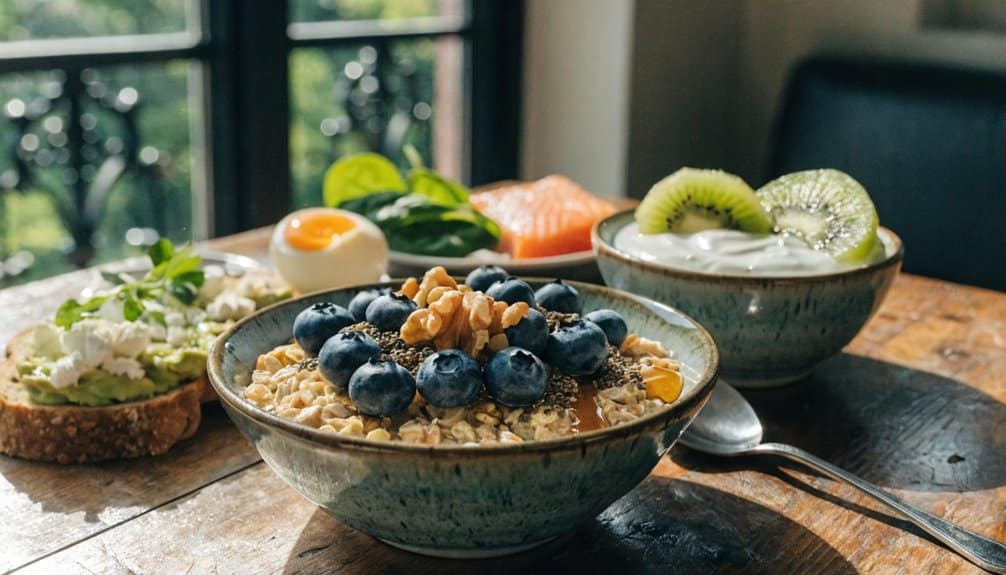
What you eat at breakfast can influence your muscle strength, blood sugar, and focus years from now. If you want to age well, your morning meal should do more than curb hunger; it should deliver protein, fiber, healthy fats, and protective antioxidants. The right foods can support your heart, brain, and metabolism in ways that add up over time. A few smart choices make the difference, and some may surprise you.
Key Takeaways
- Choose protein-rich breakfasts like eggs or Greek yogurt to help preserve muscle, steady energy, and support appetite control with age.
- Eat high-fiber foods such as oatmeal and whole grains to improve digestion, stabilize blood sugar, and help lower LDL cholesterol.
- Add fruits, berries, and vegetables for vitamins, minerals, and antioxidants that support brain function, heart health, and healthy aging.
- Include healthy fats from walnuts, chia seeds, or flaxseeds to support heart health, triglyceride balance, and brain protection.
- Build balanced breakfasts with protein, whole grains, produce, and low added sugar to promote lasting energy and better long-term health.
Why Breakfast Supports Healthy Aging

As you get older, breakfast can do more than curb hunger—it helps stabilize blood sugar, supports muscle maintenance, and supplies key nutrients that are often underconsumed later in life, such as protein, fiber, calcium, vitamin D, and B vitamins. Eating in the morning also gives you a practical metabolism boost by breaking the overnight fast and supporting steady energy for daily activity. A balanced breakfast may improve appetite control later, making it easier to meet nutrient needs without overeating. Including fiber, healthy fats, and micronutrients supports digestive health and nutrient absorption, which can become less efficient with age. When you eat breakfast consistently, you create a routine that helps reinforce hydration, medication timing, and overall diet quality—small habits that can meaningfully support healthy aging over time. Choosing breakfast foods rich in whole grains and lean protein can further support heart health, blood sugar control, and sustained energy as you age.
Protein-Rich Breakfast Foods
Because muscle loss tends to accelerate with age, making protein a priority at breakfast can help you better preserve strength, function, and satiety throughout the day. Aim for 20 to 30 grams by pairing leucine-rich foods like eggs, Greek yogurt, cottage cheese, milk, soy foods, or smoked salmon with produce or whole grains. Including dairy or fortified plant milks at breakfast can also support bone health by providing calcium and vitamin D, which are especially important as you age. You don’t need elaborate meals. Try simple egg recipes, such as vegetable omelets, scrambled eggs with tofu, or hard-boiled eggs with plain yogurt. For oatmeal variations, boost protein with milk, skyr, chia, hemp seeds, peanut butter, or a scoop of protein powder. If you prefer savory options, choose breakfast burritos with beans and eggs or whole grain toast topped with ricotta and salmon. Prioritizing protein early can also support steadier energy and appetite control.
High-Fiber Breakfast Foods
Why does fiber matter so much at breakfast as you age? It helps keep digestion regular, supports steadier blood sugar, and can improve fullness, which may make weight management easier. Higher-fiber breakfasts are also linked with better heart health, especially when they include soluble fiber. A practical option is oats: oatmeal benefits include beta-glucan, a soluble fiber shown to help lower LDL cholesterol. You can cook plain oats and add berries, nuts, or chia seeds for extra fiber, minerals, and healthy fats. Whole-grain toast, bran cereal with minimal added sugar, or a smoothie blended with flax and fruit can also work well. Aim to build breakfast around fiber-rich foods you’ll actually eat consistently, and increase intake gradually while drinking enough water to stay comfortable. Choosing high-fiber options like oats, fruits, and whole grains at breakfast supports cardiovascular disease prevention, especially when combined with a generally balanced, low-sodium eating pattern.
Brain-Boosting Breakfast Foods

How can breakfast support your brain as you age? Choosing foods with strong nutrient density helps supply the glucose, protein, fats, vitamins, and minerals your brain needs for steady function. Eggs provide choline, which supports memory and neurotransmitter production. Berries deliver anthocyanins linked with cognitive enhancement, while walnuts offer plant omega-3s and polyphenols that may protect neurons from oxidative stress. Including nutrient-dense breakfast foods can lower your risk of micronutrient undernutrition, which becomes more common with age and is linked to impaired cognitive function.
You can build a practical brain-boosting breakfast by pairing plain Greek yogurt with blueberries and walnuts, or adding spinach and eggs to whole-grain toast. Oats contribute slow-digesting carbohydrates for consistent energy, and pumpkin seeds add magnesium, zinc, and iron, nutrients involved in attention and learning. Keep added sugar low, since sharp spikes and crashes can make focus feel less stable through the morning.
Heart-Healthy Breakfast Foods
As you age, a heart-healthy breakfast can help support blood pressure, cholesterol, and vascular function by emphasizing fiber, unsaturated fats, and key minerals. Aim to build meals around whole grains like oatmeal or barley, which provide soluble fiber that can help lower LDL cholesterol. Pair them with yogurt or milk for potassium, calcium, and protein, nutrients linked with healthier blood pressure regulation. You can also add omega 3 sources such as chia seeds, ground flaxseed, or walnuts to support triglyceride balance and arterial health. Including foods rich in monounsaturated fats, such as avocado, nuts, and olive oil, can help raise HDL (“good”) cholesterol and further support heart health. Avocado on whole grain toast offers monounsaturated fat, while beans and eggs provide satisfying protein without relying on processed meats. Keep sodium in check by choosing minimally processed options, and use herbs, nuts, or seeds for flavor and texture instead.
Antioxidant-Rich Breakfast Foods
Along with supporting heart health, breakfast can also help protect aging cells by supplying antioxidants that limit oxidative stress, a process linked with inflammation, cognitive decline, and eye damage over time.
You can boost antioxidant intake with colorful, whole foods that deliver polyphenols, vitamin C, carotenoids, and vitamin E. Berry smoothies are a practical option because blueberries, strawberries, and blackberries provide anthocyanins shown to support brain and vascular health. Oatmeal bowls also work well when topped with walnuts, chia seeds, cinnamon, and sliced kiwi, adding compounds that help counter free radicals. If you prefer savory foods, spinach and tomatoes offer lutein, zeaxanthin, and lycopene, nutrients associated with eye and cellular protection. Choosing a variety of plant foods at breakfast helps you cover multiple antioxidants consistently over time and support healthier aging. As research and regulatory reviews continue to clarify how dietary antioxidants work in the body, regularly including vitamin C–rich fruits, vitamin E–containing nuts and seeds, and colorful vegetables at breakfast remains a practical way to support long-term health.
How to Build a Breakfast for Healthy Aging

To build a breakfast that supports healthy aging, aim for a balanced mix of protein, fiber-rich carbohydrates, and healthy fats so your body gets steady energy and key nutrients early in the day.
You’ll support muscle maintenance with Greek yogurt, eggs, tofu, or cottage cheese. Add fiber-rich carbohydrates like oats, berries, or whole grain toast to help digestion, cholesterol, and blood sugar control. Include healthy fats from nuts, seeds, avocado, or nut butter for satiety and brain health. For portion control, fill half your plate or bowl with produce, then build around protein and whole grains. Keep added sugars low and sodium moderate, especially if you’re managing blood pressure. Simple meal prep, like overnight oats or egg muffins, can make this routine easier to follow consistently every morning. Eating a balanced breakfast alongside regular physical activity can further support cardiovascular health, maintain a healthy weight, and reduce the risk of chronic disease as you age.
Frequently Asked Questions
Can Breakfast Timing Affect Medication Effectiveness in Older Adults?
Yes, your breakfast timing can affect medication effectiveness in older adults because meal timing changes medication absorption. You should follow food instructions, ask your pharmacist about interactions, and keep breakfast consistent to help medications work reliably.
Are Frozen Breakfast Foods as Nutritious as Fresh Options?
Absolutely—some frozen breakfast foods can be nearly superhero-level nutritious, and you’ll love the convenience factor. If minimally processed, frozen nutrients often rival fresh, but you should watch sodium, added sugar, and refined grains carefully.
How Does Breakfast Impact Bone Health With Aging?
Breakfast supports your aging bones by improving nutrient timing and delivering calcium sources, protein, and vitamin D early. You’ll strengthen bone remodeling when you include yogurt, fortified milk, tofu, or calcium-set foods consistently each morning.
What Breakfast Choices Help With Age-Related Digestive Sensitivity?
You’ll do best with gentle, easy-to-digest breakfasts like oatmeal, yogurt, bananas, and eggs. Choose fiber rich foods gradually, add probiotic options like kefir, and avoid greasy, highly processed items that can worsen bloating.
Can Older Adults Skip Breakfast and Still Age Healthfully?
Sure, because aging magically ignores nutrition—you can skip breakfast, but you don’t have to. Intermittent fasting may support metabolic health; still, nutrient timing and adequate protein can better protect cognitive function and muscle overall.



Add Comment