
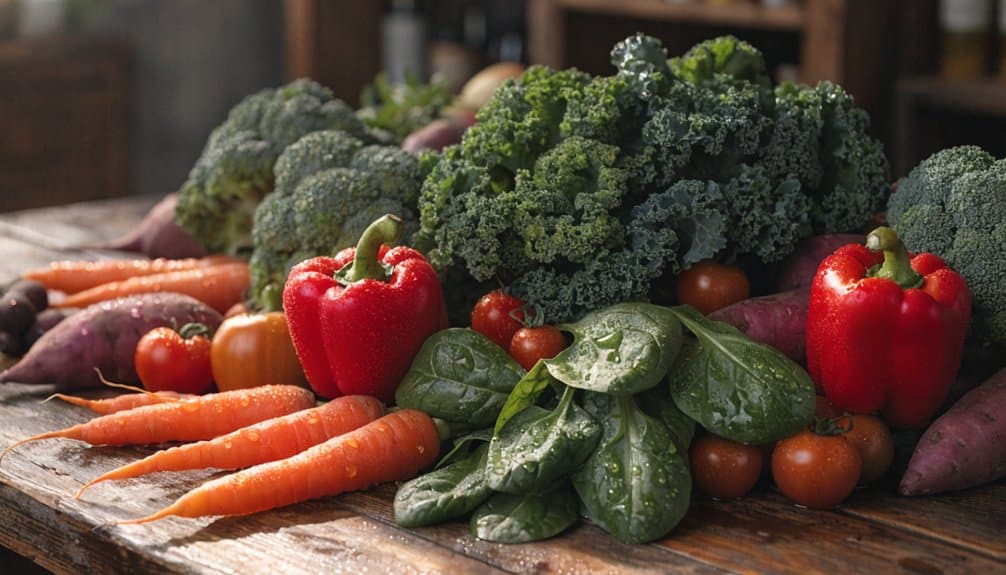
You may not realize that some vegetables help your skin in different ways, from supporting collagen to limiting oxidative stress that speeds visible aging. If you want a practical approach, focus on vegetables with strong evidence behind their vitamin, carotenoid, and antioxidant content rather than broad “superfood” claims. A few common choices stand out for skin support, but the reasons they work—and how to use them well—matter more than you might expect.
Key Takeaways
- Red bell peppers and broccoli provide vitamin C, which supports collagen production and helps maintain firmer, healthier-looking skin.
- Carrots, sweet potatoes, and spinach supply beta-carotene and carotenoids that help protect skin cells from oxidative stress.
- Tomatoes offer lycopene, an antioxidant that may help defend skin against environmental damage linked to visible aging.
- Leafy greens like kale and spinach deliver folate, vitamin K, lutein, and polyphenols for overall skin and cellular support.
- Cruciferous vegetables and colorful produce support skin, hydration, and immunity, especially when eaten regularly and paired with healthy fats.
Best Anti-Aging Vegetables for Skin

When you’re focusing on skin aging, the most useful vegetables are often the ones rich in antioxidants, vitamin C, beta-carotene, and water, because these nutrients help support collagen production, protect against oxidative stress, and maintain hydration. You’ll get strong anti aging benefits from red bell peppers, tomatoes, carrots, spinach, and broccoli. Red bell peppers and broccoli provide notable vitamin C, while carrots and spinach supply beta-carotene. Tomatoes add lycopene, and cucumbers can help with fluid intake because they’re water-rich. For a practical routine, aim to rotate colors across meals rather than relying on one “superfood.” Light cooking can improve access to some vegetable nutrients, while raw options still add texture and variety. If you want sustainable results, pair these vegetables with overall balanced eating habits and adequate protein. For even better skin-supportive results, consider taking advantage of free consultations with health professionals who can personalize your vegetable and supplement choices for long-term anti-aging benefits.
Why Anti-Aging Vegetables Work
Although no single vegetable can stop aging, anti-aging vegetables work because they supply compounds your body actually uses to protect cells and maintain tissue over time. Their antioxidant properties help limit oxidative stress, while vitamins, minerals, fiber, and plant pigments support cellular health, collagen formation, and steady inflammation control. Many of these vegetables are rich in vitamin C, vitamin E, and other physiological antioxidants that your body already relies on to neutralize reactive oxygen species and maintain a healthy redox balance.
| Benefit | Image |
|---|---|
| Antioxidants | A shield around your cells |
| Vitamin C | Threads reinforcing collagen |
| Carotenoids | Sunscreen beneath your skin |
| Fiber | A broom guiding waste out |
When you eat a variety regularly, you’re giving your body tools, not miracles. That distinction matters. Research suggests vegetables can support skin, blood vessels, and immune function, especially within an overall healthy pattern. So, think of them as daily maintenance that helps you age better, not a cure-all.
Leafy Green Anti-Aging Vegetables
Among anti-aging vegetables, leafy greens stand out because they pack several protective nutrients into very few calories. If you want steady support for skin, eyes, and overall cellular health, greens are a smart place to start. They provide folate, vitamin K, lutein, and polyphenols that help your body manage oxidative stress. While trendy measures like total antioxidant content focus on lab results, leafy greens are especially valuable because they deliver established antioxidant vitamins such as A, C, and E that have proven roles in protecting cells.
When you look at kale benefits, you’ll find high levels of vitamins A, C, and K, plus compounds linked with healthy inflammation balance. Spinach nutrition is also impressive, giving you folate, magnesium, and carotenoids in a versatile form. You don’t need huge servings to benefit; adding a handful to eggs, soups, smoothies, or grain bowls works well. For balance, rotate varieties like arugula, chard, and romaine so you broaden your nutrient intake over time.
Orange and Red Vegetables for Collagen

If you’re looking to support collagen as you age, orange and red vegetables deserve a regular spot on your plate. Carrots, sweet potatoes, red bell peppers, and tomatoes supply vitamin C and carotenoids, two nutrients tied to healthy collagen production and protection. Vitamin C helps your body build collagen, while carotenoid benefits include helping limit oxidative stress that can break it down over time. Including these vegetables as part of a diverse, balanced eating pattern also aligns with broader healthy diet guidelines that support overall skin and cardiovascular health. You don’t need huge amounts to benefit. Try adding roasted sweet potatoes, sliced peppers, or tomato-based sauces to meals you already make. Eating these vegetables with a little olive oil can improve carotenoid absorption. While they won’t erase wrinkles on their own, they can support skin elasticity as part of an overall diet that includes enough protein, healthy fats, and consistent sun protection habits daily.
Cruciferous Vegetables for Skin Defense
Because your skin faces daily stress from UV exposure and pollution, cruciferous vegetables like broccoli, Brussels sprouts, cauliflower, and kale can be a smart addition to your routine. They supply vitamin C, carotenoids, and sulfur-containing compounds that help support collagen formation, antioxidant defenses, and normal detoxification pathways linked to healthier-looking skin.
Research suggests these vegetables may help limit oxidative stress and inflammation, two processes associated with dullness, uneven tone, and earlier visible aging. That doesn’t make them a cure-all, but their cruciferous benefits are meaningful when your overall diet is solid. You may also gain folate and vitamin K, nutrients involved in cell maintenance and repair. For skin rejuvenation, think of cruciferous vegetables as steady, supportive players that help your skin better handle everyday environmental strain over time. In addition to diet, maintaining evidence-based skin care habits—like gentle cleansing and consistent moisturization—can further support your skin’s ability to cope with daily environmental stressors.
Easy Ways to Eat More Anti-Aging Vegetables
While it’s easy to think healthy eating has to be complicated, getting more anti-aging vegetables into your day often comes down to a few repeatable habits. Research suggests consistency matters more than perfection, so make vegetables easier to reach, prepare, and enjoy.
- Add spinach or cauliflower to smoothie recipes for extra antioxidants without a strong flavor.
- Keep washed carrots, bell peppers, and cucumbers visible for quick vegetable snacks between meals.
- Roast a sheet pan of broccoli, Brussels sprouts, or sweet potatoes, then use leftovers in bowls, eggs, or wraps.
- Pair vegetables with healthy fats like olive oil or avocado, which can help your body absorb carotenoids better. Adding vegetables to meals that include omega-3 fats from foods such as salmon, walnuts, or flaxseed can further support heart, brain, and eye health as you age.
You don’t need a drastic diet overhaul; small, reliable choices can support healthier skin, eyes, and aging over time.
Frequently Asked Questions
Can Anti-Aging Vegetables Interfere With Common Medications or Supplements?
Yes—like garden neighbors competing for sun, some vegetables can affect your medications or supplements. You should watch for drug interactions and changes in nutrient absorption, especially with warfarin, thyroid meds, iron, and calcium supplements.
Are Frozen Vegetables as Effective as Fresh for Anti-Aging Benefits?
Yes—you’ll usually get comparable anti-aging benefits from frozen vegetables, since frozen nutrition stays high after quick processing. You should choose plain varieties and use gentle cooking methods, because overcooking can reduce some vitamins and antioxidants.
How Long Does It Take to See Skin Changes From Vegetables?
Like dawn warming slowly, you’ll usually notice subtle skin changes in 4 to 8 weeks, though fuller improvements may take 2 to 3 months. Your skin elasticity depends on consistency, overall diet, and nutrient absorption.
Which Anti-Aging Vegetables Are Safest for Sensitive Stomachs?
For sensitive stomachs, you’ll usually tolerate cooked carrots, zucchini, spinach, peeled sweet potatoes, and green beans best. They support digestive health and nutrient absorption, especially when steamed, portioned modestly, and introduced one at a time.
Can Children Benefit From Eating Anti-Aging Vegetables Too?
Absolutely—you can help children benefit from these vegetables; think of them as tiny shields. Their nutritional value supports growth, while early exposure builds childhood habits. You shouldn’t expect miracles, but regular, varied servings can promote lifelong health.

Add Comment