
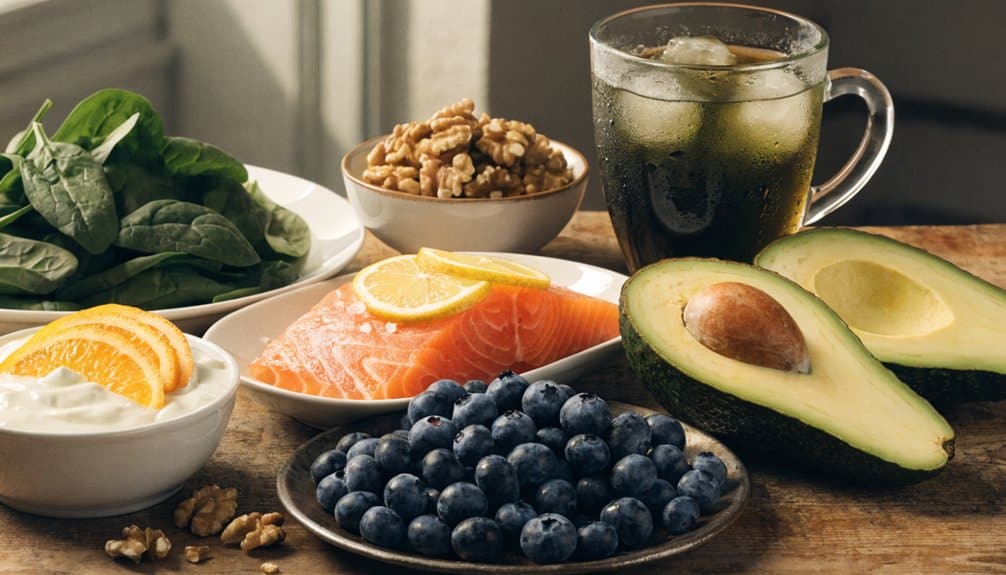
Like the fountain of youth in old stories, your best bet is simpler: foods that consistently support skin and energy from the inside out. Evidence points to antioxidant-rich produce, healthy fats, and quality protein as key players in collagen support, inflammation control, and steadier stamina. But not all “healthy” choices work the same way, and a few everyday foods may do more for your skin and energy than you’d expect.
Key Takeaways
- Fatty fish like salmon and sardines provide protein and omega-3s that support skin repair, hydration, and reduced inflammation.
- Berries, citrus, and leafy greens supply antioxidants and vitamin C to protect collagen, improve glow, and fight oxidative stress.
- Eggs, Greek yogurt, legumes, and soy offer protein for tissue repair and help maintain skin firmness and steady energy.
- Avocados, olive oil, nuts, and seeds deliver healthy fats, vitamin E, and minerals that support the skin barrier and sustained energy.
- Oats, grain bowls, smoothies, and fruit-and-yogurt combinations make it easier to eat nutrient-dense foods consistently for long-term skin and energy benefits.
Best Longevity Foods for Skin and Energy

When you’re choosing longevity foods that support both skin and energy, it helps to focus on options that deliver antioxidants, healthy fats, protein, and key micronutrients in the same meal. Think salmon, eggs, Greek yogurt, berries, avocado, oats, and leafy greens. These foods provide protein for tissue repair, fats that support the skin barrier, and steady carbohydrates for more stable energy. You’ll also benefit from simple combinations, like superfood smoothies with yogurt, spinach, chia, and berries, or grain bowls topped with beans and olive oil. Nuts and seeds make practical snacks because they’re filling and nutrient-dense. If you want a low-sugar beverage option, herbal infusions can support hydration without replacing meals. Aim for variety across the week, since no single food covers every nutrient your skin and energy levels need. In line with global guidance, emphasizing fruits, vegetables, and whole grains as part of a healthy diet also supports long-term skin health and sustained energy.
Why Antioxidants Help You Age Better
Although aging is driven by many factors, antioxidants can help by limiting oxidative stress, a process where unstable molecules called free radicals damage collagen, cell membranes, and DNA over time.
- They support cellular repair, which may slow the aging process.
- They aid inflammation reduction, helping protect skin elasticity.
- They work best through varied antioxidant sources within smart dietary patterns.
- They complement lifestyle choices like sleep, exercise, and sun protection.
For you, that means aiming for nutrition balance rather than chasing miracle foods. Research suggests antioxidants may also support skin hydration by preserving barrier function, but benefits depend on your overall habits. A balanced approach is most realistic: build meals around plant diversity, include healthy fats, and stay consistent. Over time, those choices can help your skin and energy. Emerging research highlights that antioxidant vitamins like vitamins A, C, and E—found in colorful produce, citrus, nuts, and vegetable oils—have proven physiological antioxidant effects in the body.
Berries and Citrus for Brighter Skin
Berries and citrus can support brighter-looking skin by giving you vitamin C, a nutrient your body uses to make collagen and protect cells from oxidative stress. You’ll also get a range of antioxidants from berries, which may help limit everyday damage linked to dullness and visible aging. While they won’t transform your skin overnight, adding these fruits regularly is a practical way to support a healthier natural glow. These fruits also provide vitamin C and other compounds that function as physiological antioxidants, helping defend your cells from oxidative stress over time.
Vitamin C Skin Support
Because vitamin C is essential for collagen production and helps neutralize oxidative stress from UV exposure and pollution, fruits like strawberries, blueberries, oranges, and grapefruit can support brighter, more resilient skin as part of a balanced diet.
- You’ll get vitamin C that helps maintain collagen, which supports firmness and smoother texture over time.
- Their high water content can complement skin hydration, especially when you’re also drinking enough fluids daily.
- Pair citrus or berries with yogurt, oats, or nuts to steady energy and improve meal balance.
- Keep expectations realistic: these foods support skin health, but they won’t replace sunscreen, sleep, or overall nutrition.
Aim for regular intake rather than megadoses. Whole fruit offers fiber and fluid, making it a practical, evidence-based choice for healthy skin and sustained daily energy.
Antioxidant-Rich Berry Benefits
Color counts when you’re building a skin-friendly plate: deeply pigmented berries and citrus supply antioxidants like anthocyanins, flavanones, and vitamin C that help limit oxidative stress linked with dullness and uneven skin tone.
For berries specifically, research suggests regular intake may help support collagen maintenance and calm inflammation that can worsen tired-looking skin. You don’t need huge amounts; a daily handful of berry varieties like blueberries, blackberries, raspberries, or strawberries fits easily into yogurt, oats, or salads. Frozen options work well too, since they’re picked at peak ripeness and retain nutrients. To keep benefits practical, choose unsweetened forms and rotate colors for a wider antioxidant mix. Simple antioxidant recipes, such as a berry-chia bowl or blended smoothie, can make consistency easier without adding excess sugar or unnecessary calories daily.
Citrus For Natural Glow
While citrus fruits don’t promise overnight radiance, they do offer a practical mix of vitamin C and flavanones that can help support brighter-looking skin over time. If you’re aiming for a natural glow, consistent intake matters more than extremes. Citrus benefits include helping collagen production, supporting antioxidant defenses, and contributing to hydration when paired with water-rich meals.
- Choose oranges or grapefruit for vitamin C and fluid.
- Add lemon to yogurt or salads for easy daily use.
- Pair citrus with iron-rich foods to support absorption.
- Use simple citrus recipes instead of sugary juices.
You don’t need megadoses to see value. Whole fruit is usually the better option because it delivers fiber and slows sugar absorption. For balanced results, rotate citrus with berries, protein, and healthy fats across meals regularly.
Leafy Greens as Longevity Foods

Leafy greens give your skin key nutrients like vitamins A, C, E, and folate, which support collagen production and help protect against oxidative stress. You’ll also get minerals and nitrates that can support steady natural energy by aiding circulation and overall cellular function. While they aren’t a cure-all, adding a variety of greens to your meals is a practical, evidence-based way to support healthier skin over time. Choosing leafy greens more often than red or processed meats can also support both skin health and the planet by aligning with sustainable dietary choices that reduce environmental impact.
Skin-Boosting Nutrients
If you want foods that support skin aging from multiple angles, greens like spinach, kale, Swiss chard, and arugula are a strong place to start. They deliver compounds your skin can use daily without relying on supplements alone.
- Vitamin C: supports collagen production, making greens useful collagen boosters alongside berries or citrus.
- Beta-carotene: helps protect skin cells and supports a healthy-looking tone.
- Vitamin K and folate: aid circulation and cell renewal, which may influence overall skin resilience.
- Water and minerals: make leafy greens helpful hydration sources, especially when you eat them consistently.
You don’t need huge servings. Add a handful to eggs, soups, smoothies, or salads. Research supports regular intake, but results depend on your overall diet, sun protection, sleep, and smoking status too.
Steady Natural Energy
Beyond supporting skin, greens can also help you maintain steadier natural energy through the day. Their folate, magnesium, iron, and nitrates support oxygen delivery and cellular energy, helping you avoid sharp crashes. Pair them with protein or healthy fats for better satiety and more reliable fuel.
| Green | Key nutrient | Practical use |
|---|---|---|
| Spinach | Iron, folate | Add to eggs |
| Kale | Magnesium | Blend into smoothies |
| Arugula | Nitrates | Toss into lunch bowls |
| Swiss chard | Potassium | Sauté with beans |
| Romaine | Water, folate | Use in wraps |
As natural energy sources, leafy greens work best in regular meals, not as miracle fixes. If you need energy boosting snacks, try hummus with romaine or a smoothie with spinach, yogurt, and berries for steady afternoon focus.
Fatty Fish for Collagen and Glow

Because your skin relies on a steady supply of protein and anti-inflammatory nutrients to stay firm and resilient, fatty fish like salmon, sardines, mackerel, and trout can be a smart addition to your routine.
- You get complete protein, which helps support collagen production and skin repair.
- The omega 3 benefits include helping calm inflammation that can contribute to dryness, redness, and premature aging.
- Fatty fish also provide vitamin D, selenium, and astaxanthin, nutrients linked with skin protection and overall well-being.
- For balance, aim for two servings weekly and prioritize sustainable sourcing to limit contaminants and support healthier oceans.
- In addition to supporting your skin, these fish supply omega-3 fats that promote normal brain and nervous system function and support heart health.
If you don’t eat fish regularly, canned sardines or salmon are practical, affordable options. Choose simply prepared varieties to avoid excess sodium or added oils overall.
Nuts and Seeds for Steady Energy
While they’re small, nuts and seeds can make a meaningful difference in skin health by providing healthy fats, plant protein, fiber, and minerals that help support steady energy and everyday repair. You’ll also get vitamin E, zinc, selenium, and magnesium, nutrients linked with antioxidant protection, normal barrier function, and reduced fatigue when intake is adequate. Because nuts and seeds are major sources of vitamin E, they can help support cell membrane protection from oxidative damage that contributes to skin aging.
For practical nut benefits, aim for small portions of almonds, walnuts, pistachios, chia, flax, pumpkin, or sunflower seeds. They’re easy energy snacks because they digest more slowly than refined carbs, which may help you avoid sharp hunger swings. Choose unsalted or lightly salted options most often, and watch portions since calories add up quickly. You can sprinkle seeds on yogurt or oatmeal, or pair a handful of nuts with fruit for better balance.
Healthy Fats for Soft, Supple Skin
How do healthy fats help your skin stay soft and supple? They support your skin barrier, reduce water loss, and help calm everyday inflammation. That means you’re more likely to maintain smoother, comfortable skin over time, especially when you choose whole-food sources regularly. Because vitamins A, D, E, and K are fat-soluble nutrients, including healthy fats in your meals also helps your skin access these protective compounds more effectively.
- Avocados: The avocado benefits include monounsaturated fats, vitamin E, and carotenoids that support hydration and resilience.
- Olive oil: Extra-virgin olive oil provides polyphenols and healthy fats linked with better skin aging outcomes.
- Fatty fish: Salmon and sardines deliver omega-3s, which may help dryness and irritation when eaten consistently.
- Practical balance: Add these fats to meals, but keep portions moderate since they’re calorie-dense.
You don’t need mega-doses—just steady intake alongside fruits, vegetables, and enough water daily.
Protein Foods That Help Keep Skin Firm
As skin ages, getting enough protein helps maintain the structure that keeps it feeling firm and resilient. You’ll support collagen production by including fish, eggs, yogurt, tofu, beans, and poultry regularly, since amino acids help repair skin tissue. Including foods rich in vitamin B6 and other B vitamins can further support energy metabolism that underpins healthy, resilient skin.
| Food | Key benefit | Practical note |
|---|---|---|
| Fish | collagen sources, omega-3s | Choose salmon or sardines |
| Eggs | complete protein | Easy, budget-friendly option |
Aim for protein diversity, because different foods deliver varying amino acids and nutrients that support elasticity. Dairy provides leucine, soy offers plant protein, and legumes add fiber that benefits overall metabolic health. If you eat animal foods, bone broth can complement other collagen sources, but it shouldn’t replace complete proteins. Consistency matters more than extremes, so spread protein intake across meals, especially as you get older for better maintenance.
Easy Meals With Longevity Foods
Building on protein-rich foods, the next step is turning longevity ingredients into simple meals you’ll actually make. Focus on combinations that pair fiber, healthy fats, antioxidants, and protein, since they support steadier energy and help skin handle daily stress.
- Stir Greek yogurt, berries, chia, and walnuts for a five-minute breakfast.
- Build a salmon and leafy greens bowl with olive oil, beans, and roasted sweet potato.
- Toss lentils, tomatoes, cucumber, herbs, and tahini into a portable lunch.
- Keep nutrient packed snacks ready, like edamame, apples with almond butter, or hummus and peppers.
Including whole grains such as oatmeal or whole grain bread at breakfast can further steady energy and support heart health thanks to their fiber content.
These quick longevity meals don’t need perfection. If you rotate colorful plants, fatty fish, legumes, and fermented foods through the week, you’ll cover key nutrients linked with healthy skin and lasting energy, consistently.
Frequently Asked Questions
Can Longevity Foods Interact With Common Medications or Supplements?
Yes—about 1 in 5 adults experiences potential medication interactions. You should know longevity foods can alter drug effects and supplement absorption; grapefruit, leafy greens, and high-fiber foods are common examples, so check with your pharmacist.
Are Frozen Longevity Foods as Nutritious as Fresh Options?
Yes—you’ll often get similar nutrition from frozen options, especially frozen fruits, because they’re processed at peak ripeness, supporting nutrient retention. You should compare labels, avoid added sugars or sauces, and use fresh when quality’s better.
How Soon Can Skin and Energy Improvements Become Noticeable?
You can notice skin hydration changes within days to two weeks, while energy levels often improve within one to four weeks. You’ll get steadier results if you’re consistent, sleeping well, hydrating, and eating balanced meals.
Can These Foods Help During Menopause-Related Skin and Energy Changes?
Yes—like steady fuel for a fading fire, these foods can ease menopause symptoms by supporting skin hydration and energy. You’ll likely notice modest benefits, especially alongside protein, omega-3s, fiber, sleep, exercise, and medical guidance.
What Longevity Foods Are Best for People With Food Allergies?
You’ll do best with allergy friendly options like beans, lentils, oats, seeds, quinoa, fruits, and vegetables; they’re nutrient-dense and adaptable. Use nutrient substitutions, and if allergies are complex, work with a dietitian.

Add Comment