
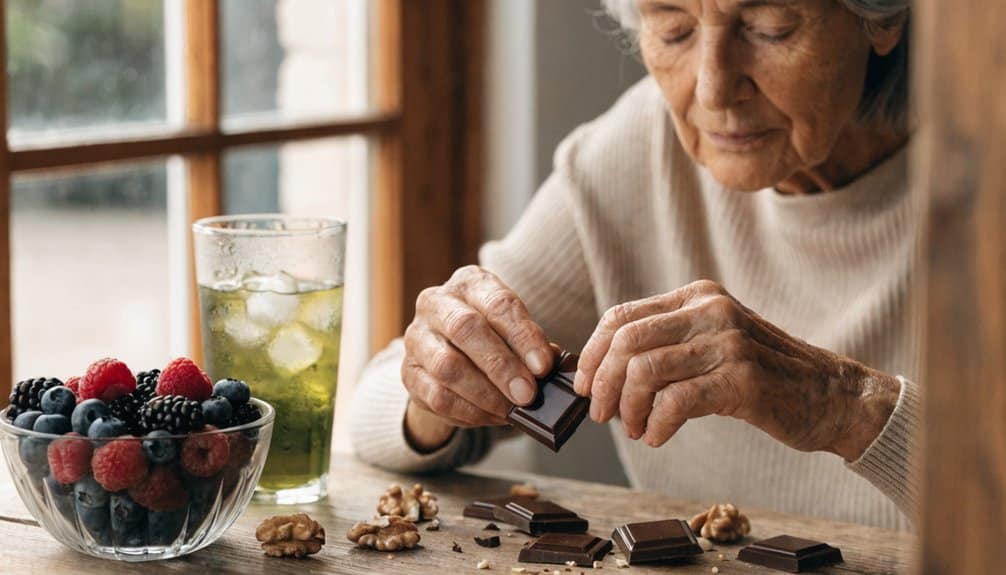
You might add a square of 70% dark chocolate after dinner and wonder if it’s helping more than your sweet tooth. Evidence suggests that, in moderation, dark chocolate’s flavonoids may support blood vessel function, brain circulation, and insulin sensitivity, all of which matter as you age. Still, benefits depend on cocoa content, portion size, and overall diet. A closer look shows where it may help most—and where it doesn’t.
Key Takeaways
- Dark chocolate’s cocoa flavanols may support healthy aging by improving blood vessel function, circulation, and healthy blood pressure.
- Its antioxidants may help reduce oxidative stress and low-grade inflammation linked to aging.
- Cocoa flavanols may support brain blood flow, helping focus, memory, and mood as you age.
- Choose minimally processed dark chocolate with 70% to 85% cocoa and limited added sugar for the most benefit.
- Keep portions moderate at 1 to 2 ounces daily, and use dark chocolate to replace less nutritious sweets.
Can Dark Chocolate Support Healthy Aging?

How might a small square of dark chocolate fit into healthy aging? It can, in moderation, complement an overall healthy pattern, but it isn’t a magic bullet. Research suggests dark chocolate may support vascular function and enjoyment, which can help you stick with balanced habits over time. That matters because healthy aging depends on daily patterns, not single foods. Still, you should keep expectations realistic. Flavonoid benefits are promising, yet results vary with cocoa content, portion size, and the rest of your diet. Dark chocolate also contains calories, and some products are high in sugar. So, treat it as a thoughtful swap for less nutritious sweets, not a health halo. That balanced view helps you avoid aging myths while making room for pleasure and consistency in your routine. Adding dark chocolate to an overall lifestyle that includes regular physical activity may further support cardiovascular health and healthy aging.
Which Compounds in Dark Chocolate Help Most?
While dark chocolate contains several active compounds, flavanols—especially epicatechin—appear to matter most for healthy aging because they’re the best studied for supporting blood vessel function and nitric oxide production. You’ll also get catechins and procyanidins, which may add antioxidant and cell-signaling effects.
| Compound | Why it matters |
|---|---|
| Epicatechin | Best-supported for flavonoid benefits and vascular signaling |
| Procyanidins | Contribute to polyphenol impact and antioxidant activity |
Practically, you’ll likely see more value from minimally processed, higher-cocoa dark chocolate than heavily alkalized products, which can lower flavanol levels. Cocoa’s methylxanthines, like theobromine, may influence alertness, but they aren’t the main aging-related focus. So if you’re choosing dark chocolate for longevity support, prioritize cocoa content, lighter processing, and modest portions over sugar-heavy options and desserts. Adding dark chocolate in this way works best as part of an overall healthy diet built around fruits, vegetables, whole grains, and limited ultra-processed foods.
How Dark Chocolate Helps Heart Health
Several of dark chocolate’s most-discussed heart benefits trace back to cocoa flavanols, which can help your blood vessels relax by supporting nitric oxide signaling. Better vessel function may support circulation, healthy blood pressure, and overall heart health when dark chocolate fits into an otherwise balanced diet. You may also get modest cardiovascular benefits from dark chocolate’s potential effects on inflammation, platelet activity, and LDL oxidation, all factors tied to long-term vascular health. Still, results vary, and chocolate isn’t a substitute for exercise, sleep, or medical care. To use it wisely, choose dark chocolate with a higher cocoa content and keep portions moderate, since added sugar and calories can offset advantages. Think of it as a small, enjoyable addition to a heart-conscious pattern, not a stand-alone strategy for healthy aging overall. While cocoa flavanols are often discussed as antioxidants, current evidence suggests that most dietary polyphenols act more as signaling molecules than as direct antioxidants in the body.
Can Dark Chocolate Support Brain Function?

Could dark chocolate give your brain a modest lift as you age? Research suggests it might. Flavanols may support brain circulation, which can aid mental agility, memory support, and learning improvement. Some evidence also links cocoa compounds with neurotransmitter function and mood enhancement, though effects are usually small. You shouldn’t expect dramatic cognitive benefits, but moderate intake may fit a brain-friendly routine and help counter age related decline alongside sleep, exercise, and diet. Pairing dark chocolate with regular exercise for mental health may further support mood and cognitive function over time.
| Potential effect | What it may support | Practical note |
|---|---|---|
| Better blood flow | Focus and memory support | Choose higher-cocoa chocolate |
| Cocoa compounds | Neurotransmitter function | Keep portions moderate |
| Pleasant taste | Mood enhancement | Watch added sugar |
Aim for dark chocolate with high cocoa content and minimal sugar overall.
Can Dark Chocolate Help Lower Inflammation?
You may get some anti-inflammatory support from dark chocolate because cocoa flavanols have been linked to lower levels of certain inflammatory markers. Its antioxidants can also help protect your cells from oxidative stress, though dark chocolate isn’t a stand-alone fix for chronic inflammation. To use it wisely, choose dark chocolate with a high cocoa content and keep portions moderate so you don’t offset the potential benefits with excess sugar or calories. Since inflammation is shaped by many determinants of health, dark chocolate works best alongside broader habits like a balanced diet, regular exercise, quality sleep, and stress management.
Cocoa Flavanols And Inflammation
While dark chocolate isn’t an anti-inflammatory cure-all, its cocoa flavanols may help lower low-grade inflammation by reducing oxidative stress and supporting healthier blood vessel function. Research suggests these compounds can improve endothelial function and may modestly reduce inflammatory markers, especially when your overall diet already supports heart health.
To get meaningful cocoa benefits, focus on dark chocolate with a high cocoa content and minimal added sugar. Since processing can reduce flavanols, not all bars deliver the same effect, so labels matter. You’ll also get flavanol sources from unsweetened cocoa powder, which can be easier to portion into yogurt or oatmeal. Keep expectations realistic: small servings fit best, and dark chocolate works as one supportive habit, not a standalone fix for chronic inflammation or aging-related conditions over time.
Antioxidants Supporting Cellular Health
Because oxidative stress tends to rise with age, the antioxidants in dark chocolate—especially cocoa flavanols and polyphenols—have drawn interest for their potential to help protect cells from damage that can contribute to inflammation. Research suggests these compounds may help neutralize unstable molecules and support pathways involved in cellular repair, which matters because ongoing oxidative stress can strain tissues over time.
For you, that means dark chocolate’s antioxidant profile may offer modest support for cellular health as part of an overall anti-inflammatory lifestyle. Still, the evidence doesn’t show that dark chocolate alone can meaningfully lower inflammation or reverse age-related damage. Its effects appear complementary, not curative. You’d likely benefit most when antioxidant-rich foods, regular activity, sleep, and stress management all work together to support healthier aging over time.
Dark Chocolate Intake Tips
A practical starting point is 1 to 2 small squares of dark chocolate a day, ideally choosing varieties with at least 70% cocoa and keeping portions modest to limit added sugar and calories. This amount may help you benefit from cocoa flavanols without crowding out more nutrient-dense foods.
For the best balance, pair dark chocolate with whole foods like berries, nuts, or plain yogurt. You can also use unsweetened cocoa in dark chocolate recipes, which lets you control sugar while still adding rich flavor. Read labels, since cocoa percentage doesn’t always reflect processing or additives. If you’re sensitive to caffeine or prone to migraines, timing and portion size matter. Think of dark chocolate as mindful indulgence: enjoyable, potentially supportive, but not a stand-alone solution for inflammation or healthy aging.
How Dark Chocolate May Affect Blood Sugar
Although dark chocolate isn’t a blood-sugar treatment, small amounts of high-cocoa varieties may fit into a healthy diet more easily than many sugary desserts. Because it usually contains less added sugar than milk chocolate, it may have a smaller effect on your blood sugar when eaten mindfully.
Some research suggests cocoa flavanols could support insulin sensitivity and help the body use glucose more effectively, though findings are mixed and modest. You shouldn’t expect dramatic changes, especially if the chocolate also contains significant sugar or calories. It’s also important to read labels, since cocoa percentage and ingredients vary widely. If you’re watching blood sugar, choosing dark chocolate with minimal added sugar and pairing it with an otherwise balanced eating pattern can make more sense than treating it like a health food alone. For people already living with type 2 diabetes, overall eating patterns, weight management, and blood sugar monitoring remain far more important for long-term health than any single food like dark chocolate.
How Much Dark Chocolate Is Enough?

To get potential benefits without overdoing calories, you’ll usually want to keep your portion modest, often around 1 to 2 ounces per day. You’ll also get more cocoa flavanols when you choose dark chocolate with a higher cocoa percentage, ideally 70% or more. Still, balance matters, since even dark chocolate can add sugar and saturated fat depending on the product.
Ideal Daily Portion
For most adults, 1 to 2 ounces of dark chocolate per day—roughly 30 to 60 grams—is enough to provide beneficial cocoa flavanols without adding excessive sugar, saturated fat, or calories.
That amount can fit into healthy daily rituals if you treat it as a mindful snack or dessert rather than something to graze on casually. Portion control matters because dark chocolate is still energy-dense, and larger servings can quickly crowd out more nutrient-rich foods. You’ll likely do best by pairing a small square or two with fruit, nuts, or yogurt to create a more satisfying option. If you’re watching weight, blood sugar, or heart health, staying near the lower end of the range is a practical starting point. Consistency matters more than eating large amounts occasionally for long-term benefits.
Choosing Cocoa Percentage
Portion size is only part of the picture, because cocoa percentage helps determine how much of dark chocolate’s beneficial flavanols you’re actually getting. For most people, choosing 70% to 85% dark chocolate is a practical sweet spot: you’ll usually get more cocoa solids, less sugar, and a richer flavor profile without making it too bitter to enjoy regularly.
- Start around 70% if you’re new to dark chocolate.
- Move toward 80% to 85% for less sugar and more intensity.
- Check ingredients, since cocoa origin and processing affect flavanol levels.
- Match percentage to your taste, digestion, and overall diet.
Higher percentages aren’t automatically better if they make you overeat or avoid it. The best choice is one you’ll enjoy consistently in sensible portions for long-term benefits.
How to Choose Better Dark Chocolate
While higher cocoa percentages often signal more flavanols, choosing better dark chocolate isn’t just about picking the darkest bar on the shelf. You’ll want a short ingredient list, ideally cocoa mass, cocoa butter, and limited added sugar. Bars with fewer additives generally preserve cocoa’s natural compounds better and often deliver cleaner flavor profiles. Since many healthy-aging diets also emphasize monounsaturated fats, consider pairing dark chocolate with foods like nuts or avocado to complement its benefits.
You should also check processing details when available. Less heavily processed chocolate may retain more beneficial polyphenols, though labels don’t always specify this clearly. Comparing sugar per serving can help you find options that support your goals without sacrificing enjoyment. Texture and taste matter, because you’re more likely to eat moderate portions consistently if you actually like it. Finally, consider ethical sourcing, since quality cacao production often aligns with better farming practices and traceability.
Who Should Limit Dark Chocolate?
Who may need to be more cautious with dark chocolate? While it can fit a healthy aging plan, it isn’t ideal for everyone. You should be mindful if you have certain health conditions or dietary restrictions, because dark chocolate may contain caffeine, added sugar, saturated fat, or common allergens. For people already working on weight management or obesity-related health issues, paying attention to dark chocolate’s calories, sugar, and fat content can help keep long-term goals on track.
- If you have acid reflux, migraines, or caffeine sensitivity, symptoms may worsen.
- If you manage diabetes, portion size matters since some bars contain significant sugar.
- If you have kidney stones, oxalates in chocolate may be a concern.
- If you’re avoiding dairy, soy, or gluten, labels matter because ingredients vary.
You don’t necessarily need to avoid dark chocolate completely, but checking cacao percentage, ingredients, and serving size can help you enjoy it more safely and comfortably overall.
Frequently Asked Questions
Is Dark Chocolate Better Eaten in the Morning or Evening?
Either can work: you’ll get morning benefits like steadier energy earlier, while evening cravings may be satisfied with a small portion later. Since dark chocolate contains caffeine, you’re better choosing morning if it affects your sleep.
Can Dark Chocolate Interact With Common Prescription Medications?
Yes, you can experience dark chocolate interactions with some prescriptions. It may affect stimulant sensitivity, blood pressure, blood thinners, or antidepressants. You should check labels, watch for medication effects, and ask your pharmacist or doctor.
Does Organic Dark Chocolate Offer Extra Aging-Related Benefits?
Like a knight with a smartwatch, you’ll find organic dark chocolate doesn’t clearly offer extra aging-related benefits; organic benefits mainly reduce pesticide exposure, while aging properties depend more on cocoa flavanols, quality, portion size, and sugar.
How Should Dark Chocolate Be Stored to Preserve Freshness?
Store your dark chocolate in cool, dry storage conditions around 60–70°F, away from light, humidity, and strong odors. You’ll improve flavor preservation by sealing it tightly; avoid refrigeration unless necessary, since condensation can affect texture.
Can Dark Chocolate Trigger Migraines or Digestive Discomfort?
Yes, dark chocolate can trigger migraines or digestive discomfort in some people. You may react to caffeine, tyramine, or sugar alcohols. For better digestive health, track portions and symptoms to identify personal migraine triggers.


Add Comment