
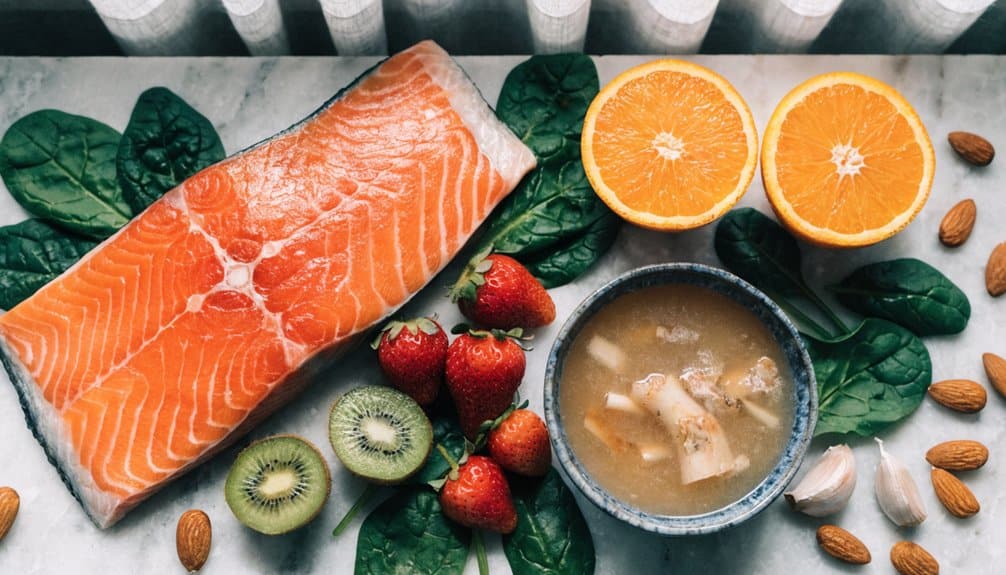
What you eat can support your body’s own collagen production, but the process depends on specific nutrients rather than one “miracle” food. You’ll need enough protein for key amino acids, vitamin C to help build stable collagen, and minerals like zinc and copper to support formation and repair. Antioxidant-rich produce also helps limit collagen damage. The foods that matter most may be simpler than you’d expect.
Key Takeaways
- Eat enough protein from eggs, fish, chicken, dairy, tofu, beans, or quinoa to supply the amino acids needed for collagen production.
- Include vitamin C-rich foods like oranges, bell peppers, strawberries, kiwifruit, and leafy greens to support collagen formation and stability.
- Add zinc sources such as oysters, beef, pumpkin seeds, and chickpeas to help tissue repair and protein synthesis.
- Eat copper-rich foods like shellfish, cashews, lentils, and dark chocolate to support collagen and elastin cross-linking.
- Choose antioxidant-rich produce such as berries, leafy greens, and cooked tomatoes to help protect existing collagen from oxidative damage.
Top Foods That Support Collagen Production

Foundation matters: your body can’t make collagen efficiently without enough protein, vitamin C, and key minerals that help build and stabilize its structure. Prioritize protein-rich foods that supply the amino acids glycine, proline, and lysine. Eggs, dairy, fish, chicken, beef, and soy foods can all help you meet those needs consistently. You’ll also benefit from minerals involved in collagen formation, especially zinc and copper. Oysters, beef, pumpkin seeds, cashews, sesame seeds, and lentils are practical options. For additional support, include plant based sources of protein like beans, tofu, tempeh, and quinoa, which help cover amino acid needs across the day. If your intake is inconsistent, collagen supplements may be convenient, but they work best when your overall diet already provides adequate protein and minerals daily. Choosing more plant-based proteins and fewer animal products can also contribute to sustainable dietary choices that support both long-term health and environmental well-being.
Vitamin C-Rich Foods for Collagen
Because vitamin C is required for the enzymes that stabilize and cross-link collagen, even a high-protein diet won’t support collagen production well if your intake is low. To cover your needs, prioritize foods with high vitamin C density throughout the day rather than relying on occasional large servings. Citrus fruits are convenient options, but they’re not your only choices. Bell peppers, kiwifruit, strawberries, broccoli, and tomatoes can provide substantial amounts per serving. Leafy greens like kale, mustard greens, and spinach also contribute, while adding folate and carotenoids that support overall skin health. You’ll get the most practical benefit by including a vitamin C-rich produce item at each meal or snack. Since vitamin C is water-soluble and not stored well, consistent daily intake matters more than intermittent supplementation alone for best results. For most adults, meeting the Recommended Dietary Allowance of vitamin C (75–90 mg per day) through these foods is sufficient to support healthy collagen formation.
Protein Sources Your Body Uses for Collagen
While collagen is a specific structural protein, your body builds it from the amino acids you absorb from protein-rich foods, especially glycine, proline, and lysine. To support collagen synthesis, prioritize complete proteins with strong protein quality, since they provide all essential amino acids your tissues need. You’ll get those building blocks from poultry, fish, eggs, dairy, lean meat, and soy foods like tofu and edamame. Bone broth contains collagen peptides, but total dietary protein matters more than any single trendy food. If you eat mostly plants, combine legumes, soy, nuts, seeds, and whole grains across the day to strengthen amino acid intake. Aim to include protein regularly at meals, because steady intake helps your body repair skin, connective tissue, and other collagen-rich structures efficiently over time, every day. To further support collagen formation and overall tissue repair, include vitamin C–rich foods alongside these protein sources, since vitamin C helps your body synthesize and stabilize collagen fibers.
Foods Rich in Zinc and Copper

Zinc and copper act like behind-the-scenes helpers in collagen production: zinc supports tissue repair and protein synthesis, and copper helps activate enzymes that cross-link collagen and elastin so connective tissue stays strong. Because many of these zinc- and copper-rich foods also contain beneficial fats, they can support the absorption of fat-soluble vitamins that play roles in skin and connective tissue health.
To get zinc benefits, you can prioritize oysters, beef, pumpkin seeds, chickpeas, and yogurt. If you eat mostly plant foods, soaking or sprouting legumes and seeds may improve zinc absorption. For copper sources, include shellfish, cashews, sesame seeds, lentils, dark chocolate, and shiitake mushrooms. You don’t need huge amounts, but steady intake matters because both minerals support the machinery your body uses to build and maintain collagen-rich structures like skin, tendons, and blood vessels. Aim to rotate these foods through meals and snacks so your intake stays consistent over time each week.
Antioxidant Foods That Protect Collagen
Minerals help your body build collagen, but protecting the collagen you already have matters too. Oxidative stress from UV exposure, pollution, and excess sugar can weaken collagen fibers, so antioxidant-rich foods deserve space on your plate. You’ll get strong protection from vitamin C, polyphenols, and carotenoids. The berries benefits include anthocyanins that help neutralize free radicals linked with collagen breakdown. Citrus, kiwi, and peppers supply vitamin C, which also supports new collagen synthesis. Leafy greens provide beta carotene, lutein, and vitamin E, nutrients associated with healthier skin and less oxidative damage. Tomatoes add lycopene, especially when cooked with olive oil. While many plant foods are rich in polyphenol compounds, current evidence shows these act more as signaling molecules than direct antioxidants in the body, so a varied diet matters more than any single “superfood.” For a practical routine, build meals around colorful produce daily, aiming for variety because different antioxidants protect collagen through complementary pathways.
Frequently Asked Questions
Can Collagen-Boosting Foods Improve Skin Elasticity at Any Age?
Yes, you can improve skin elasticity at any age, though results vary. Prioritize collagen rich fruits, vitamin C, protein, and omega-3s; they support collagen synthesis, antioxidant defense, and skin hydration for healthier, more resilient skin.
How Long Before Dietary Changes Affect Natural Collagen Production?
You’ll usually notice shifts in 8–12 weeks: slow cells, steady change. Your collagen synthesis timeline depends on protein, vitamin C, zinc, and copper intake, while dietary impact duration varies with age, baseline nutrition, and consistency.
Are Collagen Supplements Better Than Collagen-Supporting Whole Foods?
Not necessarily—you’ll usually benefit more from whole foods, since they provide collagen sources plus vitamin C, protein, zinc, and copper. Supplements can help if your dietary preferences or intake make meeting those nutrients harder.
Can Cooking Methods Reduce Nutrients Needed for Collagen Synthesis?
Yes—like a thief in the night, some cooking techniques can lower nutrient retention. You’ll preserve vitamin C, folate, and antioxidants better by steaming, microwaving, or quick-sautéing instead of prolonged boiling or high-heat roasting.
Do Smoking and Sun Exposure Interfere With Collagen Production?
Yes, smoking and sun exposure interfere with collagen production by accelerating collagen degradation. You’re facing major lifestyle factors that increase oxidative stress, damage skin proteins, and raise vitamin C needs, so limiting both supports healthier collagen synthesis.


Add Comment