
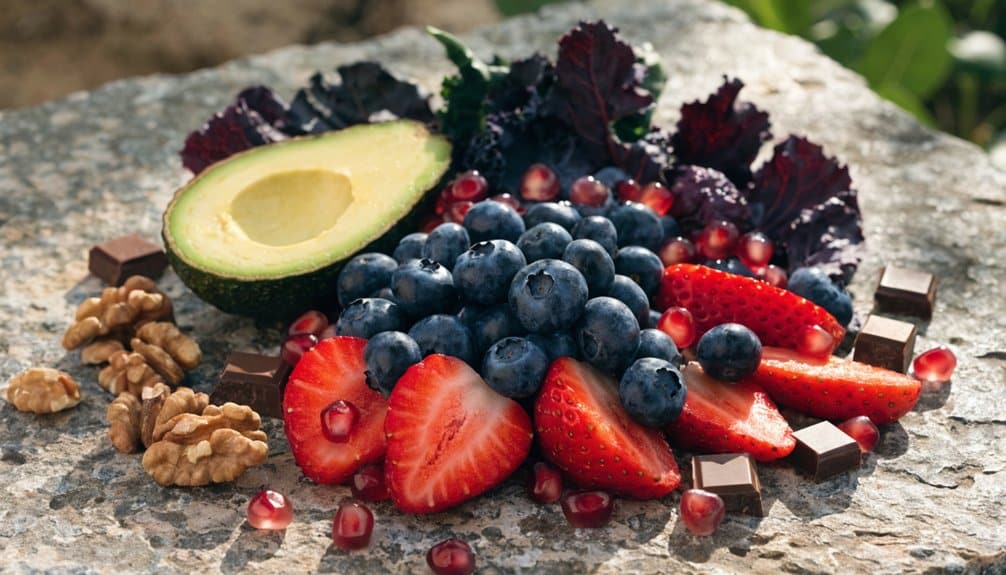
If you want younger-looking skin, what you eat can influence collagen support, oxidative stress, and moisture balance. Antioxidant-rich foods like berries, citrus, leafy greens, nuts, seeds, and avocados supply vitamin C, vitamin E, carotenoids, and polyphenols that help protect skin cells and support repair. Some options are especially useful for brightness, while others matter more for firmness and barrier health—and that’s where the smartest choices start.
Key Takeaways
- Berries and citrus provide vitamin C and polyphenols that support collagen production, brighten skin tone, and help defend against oxidative damage.
- Leafy greens like spinach and kale supply lutein, beta-carotene, and vitamin C to protect skin structure and support repair.
- Nuts, seeds, and avocados deliver vitamin E, healthy fats, and minerals that strengthen the skin barrier and improve moisture retention.
- Tomatoes, sweet potatoes, and other colorful vegetables offer carotenoids that help protect collagen, elasticity, and cell membranes from free radical damage.
- Eating a variety of antioxidant-rich whole foods regularly supports long-term skin health better than relying on a single superfood.
Why Antioxidants Matter for Younger Skin

Because your skin is constantly exposed to UV light, pollution, and normal metabolic stress, it produces free radicals that can damage collagen, elastin, and cell membranes over time. When free radicals outnumber your body’s defenses, oxidative stress increases, accelerating skin aging through wrinkles, dryness, uneven tone, and reduced firmness. Antioxidants matter because they help neutralize these unstable molecules before they trigger more damage. In fact, dietary antioxidants like vitamins A, C, and E are among the few compounds with scientifically recognized antioxidant activity in the body, making them especially relevant for long-term skin health.
You also rely on antioxidants to support repair pathways, protect the skin barrier, and preserve structural proteins that keep skin smooth and resilient. Nutrients such as vitamin C, vitamin E, carotenoids, polyphenols, selenium, and zinc all contribute to healthier skin function. In practical terms, consistently meeting your antioxidant needs can help your skin better withstand daily exposure and maintain a younger-looking appearance over time.
Top Antioxidant Foods for Younger Skin
While no single food can stop skin aging, regularly eating a variety of antioxidant-rich foods can give your skin the nutrients it needs to better handle oxidative stress. Focus on leafy greens, tomatoes, sweet potatoes, beans, nuts, seeds, green tea, and dark chocolate with high cocoa content. These foods supply vitamin E, carotenoids, polyphenols, selenium, zinc, and vitamin C, which help protect collagen, support barrier function, and limit inflammation. Because compounds like vitamin C, vitamin E, and glutathione are key physiological antioxidants, regularly including foods that provide their precursors can support your body’s natural defense against oxidative stress. You can build meals around spinach salads, lentil bowls, roasted orange vegetables, and oatmeal topped with seeds. For convenience, blend greens, cocoa, and nuts into superfood smoothies. Choosing seasonal fruits also helps diversify your antioxidant intake across the year. Aim for color, variety, and consistency, since skin benefits come from long-term dietary patterns, not quick fixes or expensive products.
Berries and Citrus for Brighter Skin
If you want to brighten your skin through food, berries and citrus are a smart place to start, since they’re especially rich in vitamin C and polyphenols that help limit oxidative stress and support collagen production. You’ll get notable berry benefits from blueberries, strawberries, raspberries, and blackberries, which provide anthocyanins linked with reduced oxidative damage. Citrus varieties like oranges, grapefruit, lemons, and mandarins supply vitamin C that supports collagen synthesis and may help improve overall skin tone. For a practical routine, add berries to yogurt or oatmeal, and use citrus in water, salads, or snacks. Aim to eat a mix several times weekly, because regular intake matters more than chasing single “superfoods.” Choosing whole fruit over juice also gives you more fiber, which helps support steady blood sugar and skin health overall. Since vitamin E works as a fat-soluble antioxidant that helps protect cell membranes from oxidative stress, pairing these fruits with healthy fats like nuts or seeds may further support skin resilience.
Leafy Greens for Firmer, Healthier Skin

Leafy greens build on the benefits of berries and citrus by supplying antioxidants plus nutrients tied to skin structure and repair. If you want firmer, healthier skin, add spinach, kale, arugula, and Swiss chard regularly. Their vitamin C supports collagen formation, while vitamin A helps normal cell turnover. Lutein and beta-carotene help defend against oxidative stress, which can affect skin elasticity over time. With regular intake of leafy greens and other nutrient-dense foods, you support long-term health maintenance that shows in your skin’s resilience and overall appearance.
- Spinach gives you vitamin C, folate, and carotenoids for daily skin support.
- Kale delivers vitamins A, C, and K, plus polyphenols that protect cells.
- Arugula and chard add magnesium and nitrates that support circulation.
Aim for at least one serving of leafy greens daily in salads, soups, smoothies, or sautés. Pair them with olive oil to improve carotenoid absorption naturally.
Nuts, Seeds, and Avocados for Repair
Three skin-repair staples—nuts, seeds, and avocados—give you antioxidant support plus the healthy fats your skin needs to stay resilient. You’ll get vitamin E from almonds and sunflower seeds, which helps protect skin lipids from oxidative stress, while walnuts add omega-3s that support barrier function and calm dryness. These nut benefits matter when your skin is exposed to UV light, pollution, and low humidity daily. By providing essential fatty acids and supporting the absorption of fat-soluble vitamins, these foods help maintain healthy skin structure and function over time.
Choose varied seed varieties, such as chia, flax, pumpkin, and sesame, to add zinc, selenium, and polyphenols that help repair tissue and support collagen-related processes. Avocados contribute monounsaturated fats, vitamin E, lutein, and glutathione, nutrients linked with better elasticity and moisture retention. Add a small handful or half an avocado to meals so you’re consistently feeding skin-friendly repair nutrients.
Frequently Asked Questions
Can Antioxidant Supplements Work Better Than Antioxidant-Rich Foods for Skin Health?
No, you’ll usually get better skin support from antioxidant-rich foods because antioxidant absorption and food synergy improve nutrient use. Supplements can help if you’re deficient, but they shouldn’t replace produce, nuts, seeds, and colorful meals.
How Long Does It Take to See Skin Benefits From Antioxidants?
Patience pays: you’ll usually notice skin benefits in 6–12 weeks, depending on antioxidant absorption, diet quality, and sun exposure. Consistent intake supports collagen and fights oxidative stress linked to skin aging, but results aren’t overnight.
Can Cooking Reduce the Antioxidant Content in Skin-Friendly Foods?
Yes, cooking can reduce antioxidant content, but you’ll preserve more with gentle cooking methods like steaming or microwaving. For better nutrient retention, avoid prolonged high heat, use minimal water, and cook vegetables until just tender.
Are There Any Side Effects From Eating Too Many Antioxidant-Rich Foods?
Yes—although you’d expect “more is better,” excessive intake can cause antioxidant overdose, digestive upset, or skin sensitivity. You’re safest getting antioxidants from varied whole foods, since food-based doses are balanced with fiber and supportive nutrients.
Which Drinks Contain Antioxidants That Support Younger-Looking Skin?
You’ll find antioxidants in green tea, berry smoothies, pomegranate juice, and cocoa. They provide polyphenols and vitamin C that help limit oxidative stress. Keep portions moderate, choose low-sugar options, and drink them consistently.

Add Comment