
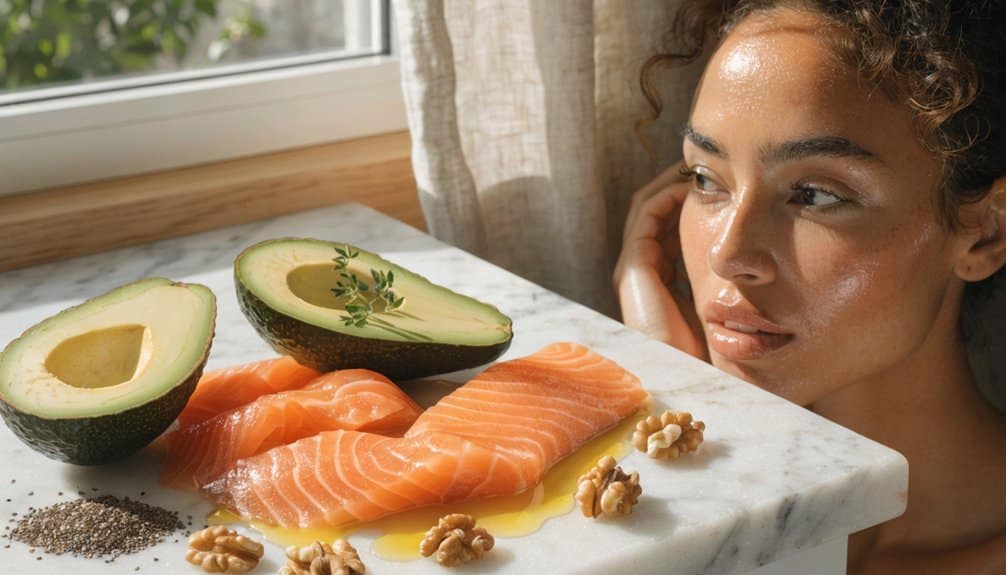
If you want skin that stays supple and resilient, your fat intake matters more than you might think. Healthy fats help maintain the skin barrier, improve moisture retention, and moderate inflammation that can accelerate visible aging. Evidence points to omega-3s and monounsaturated fats as especially relevant for texture, elasticity, and overall skin function. But not all fats support your skin in the same way, and the difference is worth understanding.
Key Takeaways
- Healthy fats strengthen the skin barrier, helping skin stay smooth, resilient, and better protected from moisture loss.
- Omega-3s and monounsaturated fats support hydration, elasticity, and calmer skin by improving lipid balance and reducing inflammation.
- Too little dietary fat can contribute to dry, flaky, dull, or tight skin with reduced softness and bounce.
- Top sources include fatty fish, avocados, extra-virgin olive oil, walnuts, flaxseeds, nuts, and seeds.
- Aim for balanced fat intake and include healthy fats with meals to support nutrient absorption and overall skin health.
How Healthy Fats Help Your Skin

Because your skin depends on lipids to maintain its barrier, healthy fats play a direct role in keeping it smooth, resilient, and better hydrated. They also support cell membrane integrity, which influences texture, suppleness, and your skin’s response to environmental stressors. Omega-3 and monounsaturated fats are associated with reduced transepidermal water loss and better overall skin condition in clinical research. In addition to skin benefits, omega-3 fats from sources like salmon, walnuts, and flaxseed help support heart health and lower cholesterol, making them valuable for both appearance and overall wellness. You won’t replace a consistent skincare routine with nutrition alone, but adequate fat intake complements topical care. Useful dietary sources include fatty fish, walnuts, flaxseeds, chia seeds, avocados, and extra-virgin olive oil. These foods provide essential fatty acids your body can’t synthesize efficiently. When your intake is insufficient, skin may appear drier, less elastic, and more reactive over time, especially under chronic stress or low-calorie dieting.
Why Healthy Fats Protect the Skin Barrier
Healthy fats help maintain the skin barrier by supplying essential lipids your skin can’t produce in adequate amounts on its own. When your lipid barrier is well supported, you’re less likely to lose water through the skin, which helps preserve hydration and resilience. This is why adequate intake of essential fatty acids is linked to stronger barrier function and reduced dryness. Because vitamins A, D, E, and K are fat-soluble vitamins, consuming healthy fats also supports the absorption of these nutrients, which are important for maintaining healthy skin structure and function.
Essential Lipid Support
While skincare products work on the surface, your skin barrier also depends on an adequate supply of dietary lipids to maintain its structure and function. You need essential fatty acids because your body can’t synthesize them, yet your epidermis uses them to build structural lipids and support normal cell turnover. Reliable lipid sources help maintain membrane flexibility, signaling, and keratinocyte cohesion.
- Omega-3 fatty acids influence inflammatory pathways linked to barrier integrity.
- Omega-6 fatty acids contribute to ceramide precursors used in epidermal architecture.
- Monounsaturated fats support lipid transport and cellular membrane stability.
When your intake is inadequate, skin can become more reactive, rough, or slow to recover. Prioritizing nuts, seeds, olive oil, avocado, and fatty fish gives your skin the biochemical substrates it needs for resilience and efficient renewal daily.
Moisture Barrier Defense
Adequate lipid intake does more than supply raw materials for skin renewal; it also helps preserve the stratum corneum’s moisture barrier. When you consume sufficient unsaturated fats, your skin can better maintain intercellular lipids that reduce transepidermal water loss and support moisture retention. This barrier function is essential for keeping skin smooth, resilient, and less reactive to environmental stressors.
If your diet is chronically low in healthy fats, lipid imbalance may impair barrier integrity, increasing dryness, irritation, and sensitivity. Essential fatty acids, especially omega-3s and omega-6s, contribute to ceramide synthesis and membrane stability, both of which strengthen the outer epidermis. By supporting barrier repair and limiting water loss, healthy fats help you maintain a more supple, youthful appearance over time with greater consistency.
How Healthy Fats Keep Skin Hydrated
Because your skin barrier depends on lipids to limit transepidermal water loss, dietary fats play a direct role in maintaining hydration. When you consume adequate fats, you support intercellular lipids in the stratum corneum, helping your skin retain water more efficiently. This effect is physiological, not cosmetic, and it influences texture, suppleness, and resilience.
- Fats strengthen barrier structure, reducing microscopic water escape.
- They aid fat absorption of fat-soluble nutrients involved in barrier maintenance.
- They complement hydration sources by improving your skin’s capacity to hold water.
If your intake is consistently too low, barrier integrity can decline, and dehydration may become more apparent through roughness and tightness. In practice, balanced fat intake helps your skin stay hydrated from within over time, supporting elasticity and comfort daily. Including healthy fats as part of an overall balanced diet works together with skin care routines like cleansing and moisturizing to support long‑term skin hydration and barrier function.
Best Healthy Fats for Skin
Several dietary fats stand out for skin health because they supply structural lipids and bioactive fatty acids that support barrier function, inflammation control, and membrane integrity. You’ll get consistent value from extra-virgin olive oil, avocados, nuts, seeds, and fatty fish. Olive oil provides monounsaturated fats and polyphenols that help limit oxidative stress affecting skin proteins.
Among avocado benefits, you’ll find oleic acid, vitamin E, and carotenoids, which support surface smoothness and photoprotection. Nut oils, especially walnut and almond oils, contribute essential fatty acids that reinforce the stratum corneum and reduce transepidermal water loss. Seeds such as flax and chia add alpha-linolenic acid, while salmon and sardines provide highly bioavailable marine fats. To improve skin outcomes, you should prioritize minimally processed sources and regular intake over sporadic use. Avocados and certain nuts are particularly valuable because they provide naturally occurring alpha‑tocopherol, the most biologically active form of vitamin E that helps protect cell membranes from oxidative damage.
How Omega-3s Help Calm Inflammation

Omega-3 fatty acids may help reduce visible redness by modulating inflammatory signaling in your skin. They also support your skin barrier, which can improve moisture retention and lower irritation from external stressors. If your skin is prone to sensitivity, getting enough omega-3s may help you maintain a calmer, more resilient complexion.
Omega-3s And Redness
When skin looks persistently red or feels reactive, low-grade inflammation is often part of the picture, and omega-3 fatty acids can help modulate that response. You may notice less skin redness when your intake supports healthier omega 3 ratios and stronger anti inflammatory properties systemically.
- Choose omega 3 sources like salmon, sardines, chia, or algae.
- Follow dietary guidelines that improve dietary impact over time.
- Consider supplementation benefits if intake is consistently low.
Evidence suggests omega-3s influence inflammatory mediators linked to common skin conditions, which can support measurable inflammation relief. If you’re evaluating skin health, consistency matters more than short-term changes. Better intake won’t treat every cause of redness, but it can be a clinically relevant nutritional strategy, especially when baseline omega-3 status is suboptimal in many adults.
Barrier Support Benefits
Because a resilient skin barrier helps limit irritation at the surface, adequate omega-3 intake may support calmer, more comfortable skin by reinforcing barrier function and reducing transepidermal water loss. When your barrier integrity is stronger, external irritants are less likely to trigger persistent sensitivity or visible inflammation.
Omega-3 fatty acids also influence your skin’s lipid composition, which affects how effectively the barrier retains moisture and resists environmental stress. Clinical findings suggest these fats can modulate inflammatory signaling, helping reduce the cascade that contributes to dryness, itching, and reactive flare-ups. If your diet regularly includes omega-3-rich foods, you may support more stable barrier performance over time. That doesn’t replace topical care, but it can complement it by addressing inflammation and barrier resilience from within, supporting healthier-looking skin overall.
Foods With Healthy Fats for Skin

Although topical products can support the skin barrier, foods that provide unsaturated fats are more relevant to long-term skin structure and function. For skin, you’ll benefit most from whole-food sources linked with anti-inflammatory lipids and antioxidant support.
- Fatty fish supplies EPA and DHA, which help regulate inflammation and support membrane integrity.
- Olive oil, avocado benefits, nut varieties, chia seeds, hemp seeds, and flaxseed sources provide monounsaturated and plant omega-3 fats.
- Dark chocolate adds polyphenols, while sunflower oil contributes vitamin E.
Use coconut oil cautiously in your diet; it’s higher in saturated fat and less aligned with evidence on cardiovascular and skin-related aging markers. Replacing saturated fats with a variety of unsaturated fat sources better reflects current research on long-term health and may indirectly benefit skin aging. Prioritizing varied unsaturated fat foods helps support elasticity, hydration, and resilience over time and photodamage defense.
How Much Healthy Fat Supports Skin Health
While there isn’t a single fat intake target proven to make skin look younger, getting enough unsaturated fat consistently supports the essential fatty acids and fat-soluble nutrients your skin needs for barrier function, hydration, and repair. For skin nourishment, follow dietary recommendations and keep fat balance steady.
| Factor | Guidance | Skin relevance |
|---|---|---|
| daily intake | 20–35% energy | supports barrier lipids |
| fat sources | nuts, seeds, fish | improves nutrient delivery |
| cooking methods | gentle heat | preserves fatty acids |
| meal timing | include with meals | boosts absorption rates |
| age factors/skin types | personalize intake | aligns needs, tolerance |
You don’t need excessive fat; you need consistency. Choose varied fat sources, distribute intake across meals, and adjust for age factors, skin types, and total energy needs. Choosing more plant-based fat sources also supports sustainable dietary choices that benefit both long-term health and environmental well-being.
Skin Signs You May Need More Healthy Fats
How can you tell if your diet may be too low in healthy fats? Your skin often shows measurable changes when essential fatty acid intake is inadequate, especially in barrier function and moisture retention.
- You notice dry patches or flaky skin that persist despite regular moisturizing.
- Your complexion looks less radiant, with a dull complexion, uneven tone, or increased sensitivity to weather or skincare products.
- You see reduced skin elasticity, making fine lines and premature wrinkles appear more pronounced.
These signs don’t confirm a deficiency on their own, but they can reflect impaired lipid support within the skin’s outer layer. If several changes occur together, your diet may not be providing enough healthy fats to help maintain suppleness, resilience, and a stronger protective barrier over time. Since topical products like moisturizers mainly work by modifying water loss from the skin’s surface, inadequate healthy fats in your diet may limit how well they can support long-term barrier function and moisture retention from within.
Easy Ways to Eat More Healthy Fats Daily
One practical way to raise healthy fat intake is to add small, consistent sources to meals you already eat. You can rotate options that improve lipid quality and support skin barrier function.
| Food | Use |
|---|---|
| avocado smoothies | breakfast |
| olive oil drizzles | vegetables |
| fatty fish | dinner |
| chia seed pudding | snack |
| hemp seed salads | lunch |
This approach also aligns with broader healthy diet principles, which emphasize regularly choosing unsaturated fats from minimally processed foods as part of a balanced pattern of eating for long-term health. You can also choose nut butter snacks, coconut yogurt, flaxseed muffins, and sunflower seed toppings to increase unsaturated fats and fat-soluble nutrient absorption. If you want a balanced dessert, dark chocolate in moderate portions fits well. Aim to distribute these foods across the day, because regular intake is easier to sustain and may better support epidermal hydration, elasticity, and overall nutrient adequacy. Consistency matters more than large, occasional servings for skin health.
Frequently Asked Questions
Can Healthy Fats Reduce the Appearance of Fine Lines Quickly?
Yes—coincidentally, if you’ve just increased healthy fats, you may notice improved skin hydration within days, which can soften fine lines slightly; however, evidence shows meaningful reduction usually requires consistent intake over weeks, not immediately.
Are Healthy Fats Safe for Acne-Prone or Oily Skin?
Yes, they’re generally safe for acne-prone or oily skin if you choose appropriate fat sources and keep intake balanced. You may benefit across skin types, though evidence suggests excess saturated fat can worsen breakouts.
Do Healthy Fats Interact With Collagen Supplements or Skincare Products?
Yes—because your biochemistry surely awaits skincare trends—healthy fats generally don’t conflict with collagen supplements or topicals; they may support fat absorption and collagen synthesis. You’d mainly watch formulations, irritation, and overall dietary balance.
Can Children and Teens Benefit From Healthy Fats for Skin?
Yes, children and teens can benefit from healthy fats for skin hydration and barrier function. You’d support normal growth by including nutritional sources like fatty fish, eggs, nuts, seeds, and avocados within balanced diets.
Is It Possible to Eat Too Much Healthy Fat for Skin Benefits?
Yes, you can eat too much; excess intake raises calorie load and may impair metabolic health without improving skin outcomes. You should balance healthy fat sources with overall needs, since fat digestion and absorption have physiological limits.

Add Comment