
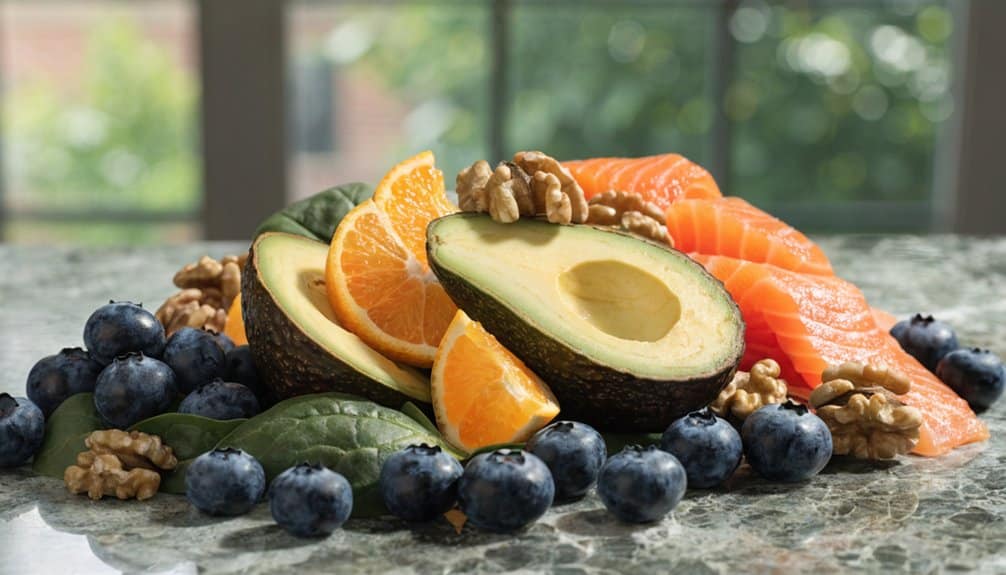
What you eat can influence how quickly your skin shows fine lines. Nutrients like vitamin C, vitamin E, omega-3 fats, and carotenoids support collagen, hydration, and defense against oxidative stress. Foods such as berries, salmon, tomatoes, nuts, and seeds can help your skin look firmer over time. Just as important, some everyday foods may speed skin aging—so knowing what to add, and what to limit, matters.
Key Takeaways
- Eat vitamin C-rich foods like berries, kiwi, citrus, and bell peppers to support collagen production and skin firmness.
- Include omega-3 sources such as salmon, sardines, chia, and walnuts to improve skin barrier function and hydration.
- Choose carotenoid-rich foods like tomatoes, cooked carrots, and red peppers to help protect skin from oxidative damage.
- Add nuts, seeds, green tea, and cocoa for vitamin E and polyphenols that help defend skin cells from stress.
- Limit sugary, processed, fried, and alcoholic foods, which can increase inflammation, dehydration, and collagen-damaging glycation.
Best Foods for Reducing Wrinkles

A few foods stand out when your goal is smoother, more resilient skin because they supply nutrients that directly support collagen, hydration, and protection against oxidative stress. Start with berries, citrus, and kiwifruit for vitamin C, which helps your body build collagen. Add salmon or sardines for omega-3 fats that support the skin barrier and reduce dryness. Include tomatoes and cooked carrots for carotenoids, especially lycopene and beta-carotene, which help defend skin from daily environmental strain. You’ll also benefit from skin friendly nuts like almonds and walnuts, which provide vitamin E, copper, and healthy fats. Use wrinkle fighting spices such as turmeric and cinnamon in oatmeal, yogurt, or smoothies for concentrated polyphenols. For hydration support, choose cucumber, oranges, and broth-based soups regularly throughout the week. Consistently choosing nutrient dense foods that support anti-aging skin care can also strengthen your immune system and promote long-term skin health.
How Diet Affects Skin Aging
Because your skin is constantly renewing itself, what you eat can either support that process or accelerate visible aging. Your diet influences collagen formation, barrier function, inflammation, and skin hydration, all of which affect wrinkle development. When you regularly eat enough protein, essential fats, vitamins, and minerals, you give skin cells the raw materials they need to repair and stay resilient. Including sources of omega-3 fats and other healthy unsaturated fats can also help reduce inflammation and support overall skin and heart health.
On the other hand, frequent high-sugar, highly processed foods can promote glycation, a process that weakens collagen and elastin. Poor overall intake may also impair nutrient absorption, limiting how effectively your body uses skin-supportive nutrients. To help your skin age more slowly, focus on balanced meals with protein, healthy fats, fiber-rich carbohydrates, and adequate fluids. Consistency matters more than any single “perfect” food choice over time.
Antioxidant-Rich Foods for Skin Repair
You can support skin repair by eating antioxidant-rich foods that help limit oxidative stress, a major driver of wrinkle formation. Focus on vitamin C sources like strawberries, kiwi, citrus, and bell peppers, since vitamin C is needed for collagen production. You’ll also benefit from polyphenol-rich choices such as berries, cocoa, green tea, and olives, which may help protect skin cells from daily damage. In addition, including foods rich in vitamin E—such as nuts and vegetable oils—can help protect your skin’s lipids from oxidative damage.
Vitamin C Sources
Several vitamin C–rich foods can support skin repair by helping your body make and protect collagen, the structural protein that keeps skin firmer and smoother. To boost intake, focus on whole foods before vitamin supplements, since foods also provide fiber and other helpful nutrients. Good options include:
- citrus fruits like oranges and grapefruit
- strawberries for vitamin C and manganese
- kiwi for vitamin C and potassium
- red bell peppers, which are especially concentrated
- broccoli for vitamin C plus sulfur compounds
Because vitamin C is water-soluble, you need it regularly. Try adding fruit to breakfast, peppers to lunch, and broccoli at dinner. You’ll support collagen maintenance, help limit oxidative damage, and give your skin nutrients it can actually use for daily repair. Consistency matters more than megadoses.
Polyphenol-Rich Choices
Along with vitamin C, polyphenol-rich foods can help limit the oxidative stress and inflammation that speed up collagen breakdown and make wrinkles more noticeable. These plant compounds support skin repair by neutralizing free radicals and influencing pathways tied to redness, UV damage, and loss of elasticity.
You can add polyphenols easily through berries, grapes, olives, herbs, green tea, and dark chocolate. Green tea provides catechins, which may help protect collagen and reduce inflammation. Dark chocolate with high cocoa content supplies flavanols that can support circulation, helping deliver oxygen and nutrients to skin. Aim for unsweetened tea, extra-virgin olive oil, and chocolate that’s at least 70 percent cocoa. Rotating colorful plant foods gives you a broader mix of protective compounds, which may strengthen your skin’s resilience over time.
Healthy Fats for Smoother Skin
Because skin cell membranes rely on dietary fat to stay flexible, healthy fats can play a direct role in keeping skin smoother and less prone to dryness that makes fine lines look more noticeable. To support skin, prioritize fats that supply essential fatty acids and vitamin E. You’ll get omega 3 benefits from salmon, sardines, trout, chia, and walnuts, which help support the skin barrier and calm dryness-related irritation. Different avocado varieties also provide monounsaturated fat and antioxidants that help your skin stay supple. Since key skin-supporting nutrients like vitamins A and E are fat-soluble vitamins, including healthy fats at meals can also help your body absorb them more effectively for skin repair and protection.
- Salmon and sardines for EPA and DHA
- Chia seeds for plant omega-3s
- Walnuts for fats plus polyphenols
- Avocados for monounsaturated fat
- Extra-virgin olive oil for vitamin E
Aim to include one of these foods daily, especially if your skin feels rough, tight, or dehydrated often.
Vitamin C Foods That Boost Collagen

You can support collagen production by eating more vitamin C-rich foods, since vitamin C is required for collagen synthesis. Citrus fruits help cover your daily needs, while berries add antioxidants that support skin repair from oxidative stress. Bell peppers are one of the most concentrated sources, so they’re an easy, practical way to boost your intake for smoother-looking skin. Including vitamin C foods as part of an overall healthy diet rich in fruits and vegetables also supports long-term skin and cardiovascular health.
Citrus For Collagen
While no single food can erase wrinkles, citrus fruits can support smoother-looking skin by supplying vitamin C, a nutrient your body needs to make collagen. If you want practical citrus benefits, add oranges, grapefruit, lemons, or limes to meals and snacks regularly. Vitamin C directly supports collagen synthesis and also helps protect existing collagen from oxidative stress.
- Oranges provide vitamin C plus fluid for hydration.
- Grapefruit adds vitamin C and helpful antioxidants.
- Lemons brighten water, yogurt, or dressings easily.
- Limes pair well with beans, fish, and salads.
- Tangerines make portable, low-prep skin-friendly snacks.
You’ll get the most from citrus by eating it consistently, not occasionally. Pair it with protein-rich foods, since your skin also needs amino acids to build and maintain strong collagen fibers over time daily.
Berries And Skin Repair
Berries offer another easy way to support skin repair, especially if you’re looking for vitamin C foods that help boost collagen. Strawberries, blackberries, raspberries, and blueberries give you vitamin C plus polyphenols, which help defend skin cells from oxidative stress that can speed visible aging. That combination supports collagen formation and may improve overall skin resilience.
For practical berry benefits, add a cup to breakfast, blend them into yogurt, or keep frozen berries on hand for smoothies. You’ll also get fiber and water, which support overall health while fitting easily into a balanced diet. Darker berries often provide anthocyanins, plant compounds linked with skin rejuvenation through their antioxidant activity. Eating a variety regularly can help you protect collagen, support repair, and nourish your skin from within over time.
Bell Peppers Benefits
Bell peppers are one of the most practical vitamin C foods for skin support, delivering a high amount of this collagen-building nutrient with very few calories. If you want firmer, smoother skin, adding them regularly can help defend collagen from oxidative stress while supporting skin hydration and repair.
- Vitamin C helps you build collagen efficiently.
- Carotenoids help protect skin from oxidation.
- Water content supports skin hydration daily.
- Red peppers provide especially concentrated antioxidants.
- They’re easy to eat raw or cooked.
Among bell pepper nutrients, you’ll also get vitamin A, B6, and folate, which support normal cell turnover. Red, yellow, and orange varieties generally offer more antioxidants than green. You can slice them into salads, eggs, or stir-fries for a simple, wrinkle-conscious habit.
Hydrating Foods for Plumper Skin
Because skin cells function best when they’re well hydrated, foods with high water content can help your complexion look smoother and slightly fuller. You can support that process by eating produce rich in water, vitamin C, and protective carotenoids, which help maintain the skin barrier and reduce dryness that exaggerates fine lines. Including water-rich fruits like watermelon and oranges at breakfast supports hydration while adding antioxidants that benefit overall health. Try adding cucumber slices to salads, sandwiches, or yogurt bowls for extra fluid and silica-containing plant compounds. Watermelon, strawberries, oranges, tomatoes, and lettuce also contribute hydration while supplying antioxidants that limit everyday oxidative stress. Pair hydrating produce with healthy fats, like those on avocado toast, to improve absorption of fat-soluble carotenoids from tomatoes or leafy greens. If your meals regularly include these foods, you’ll give your skin steady hydration support from the inside while improving overall diet quality too.
Minerals That Support Firmer Skin
Hydration helps skin look smoother, but minerals also shape how firm it feels by supporting collagen structure, antioxidant defenses, and normal skin repair. You’ll get the most benefit by regularly eating mineral-rich whole foods. Chronically low intake of essential nutrients can contribute to wider issues of micronutrient undernutrition, which affects overall tissue health, including the skin.
- Zinc helps tissue renewal and collagen formation.
- Top zinc sources include oysters, beef, pumpkin seeds, and beans.
- Copper supports cross-linking that strengthens collagen and elastin fibers.
- Selenium helps protect skin cells from oxidative stress.
- Magnesium benefits include supporting vitamin D function, inflammation balance, and steady sleep, which affects repair.
To cover your bases, build meals around seafood, legumes, nuts, seeds, leafy greens, and whole grains. You don’t need megadoses; consistent intake matters more. When your diet supplies these minerals daily, your skin gets the raw materials it needs to stay resilient and firmer.
Foods and Drinks That Worsen Wrinkles

While no single food suddenly causes wrinkles, a steady pattern of high-sugar foods, heavily processed carbs, excess alcohol, and frequent fried or charred items can speed up the processes that make skin look older. Too much sugar consumption promotes glycation, a reaction that stiffens collagen and elastin, making your skin less resilient. Processed foods often deliver refined grains, sodium, and unhealthy fats while crowding out nutrients your skin needs for repair. Alcohol can dehydrate you, worsen inflammation, and reduce antioxidant defenses. Fried foods and heavily charred meats may increase oxidative stress, which can damage skin cells over time. Sugary drinks are especially easy to overconsume without feeling full. If you want steadier skin support, limit these items consistently rather than expecting one “bad” meal to create wrinkles overnight. Because many of these foods also contribute to weight gain, they can indirectly worsen skin health through obesity’s links with chronic inflammation and metabolic stress.
Simple Meals for a Skin-Friendly Diet
A skin-friendly diet gets much easier when you build simple meals around foods that support collagen, limit oxidative stress, and provide steady hydration. With smart meal prep, you can keep choices practical, balanced, and wrinkle-conscious daily.
- Greek yogurt with berries, walnuts, and chia
- Salmon salad with spinach, tomatoes, and olive oil
- Eggs with avocado and vitamin C-rich peppers
- Oatmeal topped with kiwi, pumpkin seeds, and flax
- Hummus, cucumbers, and almonds for snack ideas
These combinations give you protein, omega-3 fats, vitamin C, vitamin E, zinc, and polyphenols that help protect skin structure. You’ll also get fiber and water-rich produce, which support hydration and overall skin resilience. Aim for minimally processed meals, consistent produce intake, and healthy fats to support smoother-looking skin over time. Building your meals this way can also help limit high glycemic foods that may otherwise contribute to excess sebum and skin congestion.
Frequently Asked Questions
Can Supplements Replace Wrinkle-Reducing Foods?
No, you shouldn’t expect supplements to fully replace wrinkle-reducing foods; supplement effectiveness varies, and nutrient absorption is often better from whole foods. You’ll get broader skin-supporting compounds, fiber, and balanced nutrients through a practical diet.
How Long Before Dietary Changes Improve Skin Appearance?
You’ll usually notice skin changes in 6–12 weeks, though it depends on nutrient absorption, hydration levels, and consistency. If you’re eating antioxidant-rich foods daily, your skin’s texture, elasticity, and overall appearance can gradually improve.
Do Cooking Methods Affect Skin-Supporting Nutrients?
Yes—your cooking techniques do affect skin-supporting nutrients; gentler methods improve nutrient preservation. You’ll retain more vitamin C, folate, and antioxidants by steaming, microwaving, or sautéing briefly, while prolonged boiling and high-heat frying can reduce them.
Are Wrinkle-Reducing Foods Safe During Pregnancy?
Absolutely—it’s a galaxy-sized yes, if you choose nutrient-dense, low-risk options. During pregnancy nutrition, foods supporting skin health are generally safe, but you shouldn’t consume high-mercury fish, excess vitamin A, or unpasteurized products.
Can Food Allergies Influence Wrinkle Formation?
Yes, food allergies can influence wrinkle formation because your immune response may trigger skin inflammation and allergy symptoms, while gut irritation can impair nutrient absorption. You’ll help protect skin by identifying triggers and maintaining nutrient intake.

Add Comment