
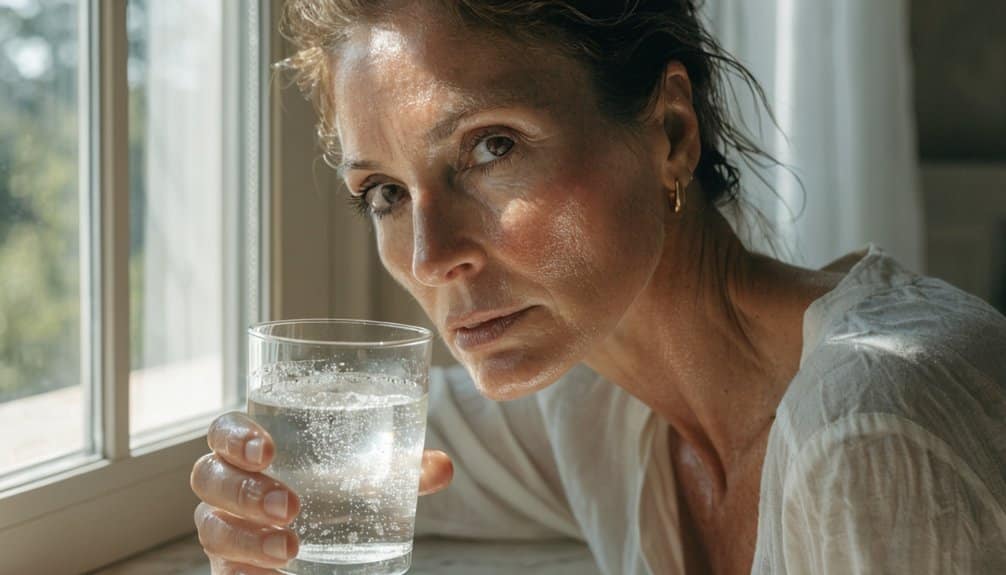
You may not realize that even mild dehydration can temporarily reduce skin elasticity and make fine lines look more visible, especially as you get older. While drinking water won’t erase wrinkles, it does support the skin barrier, moisture balance, and overall texture. Aging skin also loses water faster than younger skin, which changes what “enough hydration” really means—and that’s where the details start to matter.
Key Takeaways
- Adequate hydration supports circulation, nutrient delivery, and skin barrier function, helping aging skin look less dry and rough.
- Dehydration makes fine lines, dullness, and superficial creasing more noticeable by reducing surface moisture and flexibility.
- Drinking more water can improve skin if you’re underhydrated, but it won’t erase wrinkles or reverse photoaging.
- Aging skin loses moisture faster because of weaker barrier lipids, lower natural moisturizing factors, and slower cell turnover.
- Best results come from consistent fluid intake, moisturizers that seal in water, and hydrating foods like citrus, yogurt, and avocado.
Can Drinking Water Help Aging Skin?

How much can drinking water really do for aging skin? You can expect modest, measurable benefits, not dramatic reversal. Adequate fluid intake supports overall physiology, including blood volume, nutrient delivery, and barrier function, which may help skin appear less dry if you were previously underhydrated. In the context of overall skin health, hydration works together with diet, sleep, and gentle skin care habits to help maintain a resilient barrier as you age.
However, hydration myths often overstate water’s direct cosmetic impact. In well-hydrated adults, drinking extra water doesn’t automatically increase skin elasticity or transform age-related changes driven by ultraviolet exposure, collagen loss, or hormonal shifts. Clinical evidence suggests benefit is most apparent when baseline intake is low or transepidermal water loss is elevated. You should view water as foundational, not corrective: it helps maintain normal skin function, but it isn’t a standalone intervention for intrinsic or photoinduced aging. Consistency matters more than excessive intake over time.
How Hydration Affects Wrinkles and Fine Lines
When your skin loses moisture, fine lines typically appear more prominent because the stratum corneum becomes less supple and smooth. If you’re dehydrated, reduced water content can increase superficial skin creasing and make wrinkles look more defined. Maintaining proper water balance supports skin elasticity, which helps your skin resist visible folding and recover its surface texture more effectively. Using moisturizers that combine humectants with occlusive ingredients can further support skin hydration by slowing transepidermal water loss and helping the skin retain moisture.
Moisture Loss And Lines
As the skin’s water content declines, its outermost layer becomes less flexible and less able to maintain a smooth surface, so fine lines tend to look more pronounced. You’ll often notice roughness, dullness, and a less even texture because moisture retention supports corneocyte cohesion and barrier function. Clinically, when superficial hydration drops, microrelief becomes more visible, especially around expressive areas.
| Change | Skin effect | What you notice |
|---|---|---|
| Lower water | Reduced flexibility | Sharper fine lines |
| Weaker barrier | More surface roughness | Duller appearance |
| Poor moisture retention | Less corneocyte cohesion | Uneven texture |
| Better hydration products | Improved surface water balance | Smoother look |
| Consistent support | Better barrier performance | Lines appear softer |
Targeted hydration products can temporarily improve skin smoothness and optical line visibility.
Dehydration And Skin Creasing
Beyond making lines look sharper, dehydration can also increase visible skin creasing because a drier stratum corneum doesn’t deform and rebound as smoothly during facial movement. When you smile, squint, or speak, reduced surface water can make microfolds form more readily and persist longer before the skin settles back. That can temporarily exaggerate fine lines, especially around the eyes and mouth.
Clinically, these dehydration effects are linked to impaired corneocyte flexibility and disrupted surface hydration, not necessarily deeper structural change. You may also notice rougher skin texture, since dryness increases scaling and uneven light reflection, making creases easier to see. In practice, improving hydration status and minimizing transepidermal water loss can reduce the prominence of these superficial movement-related creases, even when underlying wrinkle formation hasn’t changed.
Water Balance And Elasticity
Although hydration can’t reverse established structural wrinkles, balanced water content is central to how elastic and smooth your skin looks day to day. When your stratum corneum is adequately hydrated, it reflects light more evenly and resists microfolding, so fine lines appear less pronounced. That effect is temporary, but clinically meaningful for visible texture.
You should also consider that skin elasticity depends on both dermal proteins and epidermal water retention. If water loss increases, corneocytes shrink, barrier function weakens, and your skin can look rougher, tighter, and more creased. Consistent fluid intake supports systemic hydration, while moisturizers reduce transepidermal water loss at the surface. Together, these factors help maintain flexibility, improve tactile smoothness, and support a fuller appearance that minimizes dehydration-related wrinkling without altering deeper age-related folds.
Why Aging Skin Loses Moisture Faster
Because the skin’s barrier and water-binding systems change with age, older skin tends to lose moisture more quickly than younger skin. As you age, lipid production declines, natural moisturizing factors decrease, and collagen depletion reduces the dermis’s capacity to retain water. Cell turnover also slows, so your stratum corneum becomes less cohesive and more permeable.
| Change | Effect | Result |
|---|---|---|
| Lower lipids | Weaker barrier | Faster water loss |
| Less NMF | Reduced binding | Surface dryness |
| Slower turnover | Rougher corneum | Increased permeability |
You’re also more vulnerable to environmental factors, including low humidity, ultraviolet exposure, and harsh cleansers, which further increase transepidermal water loss. Clinically, these age-related shifts make your skin drier, less resilient, and slower to recover after routine stressors and irritation. Targeted moisturizers with ingredients like ceramides and niacinamide peptides can help reinforce the skin barrier and improve hydration in aging skin.
How Drinking Water Helps Your Skin Barrier

Staying well hydrated supports your skin barrier in two direct ways: it helps maintain overall fluid balance for the epidermis and supports the transport of nutrients needed for barrier repair. When your hydration levels are adequate, water distribution to skin tissues is more stable, which helps preserve enzyme activity involved in lipid organization and corneocyte cohesion. That matters because your skin barrier depends on an orderly matrix of lipids, proteins, and natural moisturizing factors. If you don’t drink enough water, systemic fluid balance can shift, potentially reducing skin comfort and resilience. Drinking water doesn’t replace moisturizers, but it does support the physiological conditions your barrier needs to function efficiently. In practice, consistent intake helps your skin better retain moisture, limit transepidermal water loss, and recover from everyday environmental stressors over time. Unlike many topical products marketed with misleading anti-aging claims, basic hydration supports skin health without relying on unproven promises.
Signs Aging Skin Needs More Hydration
How can you tell when aging skin needs more hydration? You’ll often notice dry patches, flaky skin, and a rougher skin texture that doesn’t improve with gentle cleansing alone. Clinically, dehydration can reduce stratum corneum flexibility, making fine lines look sharper and contributing to a dull complexion. You may also feel itchiness or tightness after washing.
Other signs include redness sensitivity, uneven tone, and a visible loss of volume that leaves skin looking less supple. When hydration is inadequate, your barrier becomes more reactive to sun damage and environmental stressors, which can intensify discomfort and accentuate surface irregularities. If your skin appears tired, feels less resilient, or shows persistent roughness despite basic care, those changes may indicate that aging skin needs better hydration support to function effectively daily. You can also look for brands that focus on anti-aging skin care and quality supplements to support hydration and overall skin health over time.
How Much Water Helps Aging Skin?
While drinking enough water supports overall skin physiology, there isn’t a fixed amount that will directly “hydrate” aging skin beyond your body’s needs; for most healthy adults, daily fluid intake around 2.7 liters for women and 3.7 liters for men from beverages and food is a useful reference, though needs vary with climate, activity, medications, and health status.
| Factor | What it means |
|---|---|
| Adequate intake | Supports circulation, barrier function |
| Excess intake | Won’t reverse wrinkles or improve skin elasticity |
| Too little | Can worsen dryness, dullness, tightness |
You’ll benefit most by meeting, not exceeding, your fluid needs. That helps counter hydration myths: more water isn’t automatically better for visible aging. If your urine is consistently dark, or you feel thirsty often, your intake may be low.
Best Foods for Skin Hydration

Meeting your fluid needs is only part of the picture; the foods you eat can also support skin hydration by supplying water, electrolytes, and nutrients involved in barrier function. Prioritize:
- Cucumbers: high water content explains cucumbers benefits for short-term hydration support.
- Watermelon: supplies water plus lycopene, which may help limit oxidative stress.
- Citrus: provides water and vitamin C, needed for collagen synthesis.
- Yogurt: contributes fluid, protein, and electrolytes that support tissue integrity.
- Avocado: avocado hydration support comes from monounsaturated fats that reinforce the skin barrier.
Including foods rich in omega-3 fats, such as salmon, walnuts, flaxseed, and chia seeds, may further support skin hydration by helping to reduce inflammation and maintain healthy cell membranes.
You’ll hydrate skin more effectively when meals combine water-rich produce with protein and healthy fats. This approach supports stratum corneum function, reduces transepidermal water loss, and helps your skin maintain softness, resilience, and a healthier aged appearance over time, with regular intake.
Habits That Help Hydrated Skin Age Better
To support skin hydration as you age, you need consistent habits that improve water balance and reduce transepidermal water loss. A daily water routine helps maintain systemic hydration, while moisture-sealing practices—such as applying emollients to damp skin—strengthen barrier function. Together, these measures can help your skin stay more resilient, comfortable, and clinically better hydrated over time. Regular physical activity, which supports overall health and well-being, can indirectly benefit skin by improving circulation and systemic hydration balance.
Daily Water Routine
Anyone aiming to support skin aging well should treat hydration as a daily routine rather than a reactive fix, because skin water balance is influenced more by consistent intake and environmental losses than by occasional large volumes of water.
You’ll benefit most by spacing fluids across the day and relying on varied water sources, not hydration myths. Prioritize:
- Drink with meals.
- Sip between tasks.
- Increase intake in heat.
- Replace exercise losses.
- Monitor urine color.
This pattern helps maintain plasma volume and supports cutaneous circulation. You don’t need excessive amounts; needs vary with body size, diet, medications, activity, and climate. Include water-rich foods, limit alcohol excess, and respond early to thirst, since even mild dehydration can reduce skin resilience and exaggerate a tired appearance over time.
Moisture-Sealing Skin Habits
Internal hydration sets the baseline, but skin aging is also shaped by how well you limit water loss at the surface. To support moisture retention, you should cleanse with low-irritation, pH-balanced formulas and apply moisturizer while skin is slightly damp. This helps reduce transepidermal water loss and reinforces barrier function, which influences texture, fine lines, and resilience.
You’ll get the best results by pairing humectants with occlusive and emollient agents. Look for hydrating ingredients such as glycerin, hyaluronic acid, urea, and panthenol, then seal them in with ceramides, squalane, or petrolatum. Daily sunscreen matters too, because ultraviolet exposure impairs the skin barrier and accelerates dryness-related aging. If you over-exfoliate or use harsh cleansers, you’ll undermine hydration despite drinking enough water.
What Hydration Can and Can’t Do for Skin
Although staying well hydrated supports normal skin physiology, it’s important to be precise about what that means: for most healthy people, drinking more water than the body needs won’t erase wrinkles, tighten lax skin, or reverse established photoaging.
What hydration can do depends partly on your skin types, barrier status, and environment. It can:
- support stratum corneum water balance
- reduce temporary tightness from dehydration
- help barrier enzymes function properly
- modestly improve skin feel and suppleness
- complement moisturizers, not replace them
These points counter common hydration myths. If you’re dehydrated, rehydration may improve dullness or fine lines caused by dryness. But collagen loss, elastosis, and pigment changes usually require sun protection, topical retinoids, procedures, and consistent barrier care for meaningful visible improvement over time.
Frequently Asked Questions
Does Caffeine Dehydrate Skin Enough to Worsen Visible Aging?
No—unless your coffee’s plotting revenge, caffeine effects usually don’t reduce skin hydration enough to accelerate visible aging. If you’re healthy, moderate intake’s clinically unlikely to matter; overall hydration, sleep, sun exposure, and smoking influence aging more.
Can Medications Affect Hydration Levels in Aging Skin?
Yes, your medications can affect hydration in aging skin; diuretics, antihistamines, and retinoids are common medication types. You may also see altered barrier function, while reduced skin absorption can further influence dryness and sensitivity.
Is Hard Water From Showers Harmful to Aging Skin?
Hard water can aggravate aging skin by disrupting your skin barrier, though it isn’t universally harmful. You may notice more dryness, irritation, or residue-related sensitivity, especially if you already have eczema, rosacea, or xerosis.
Do Humidifiers Help Aging Skin Stay Hydrated Overnight?
Yes—humidifiers can help your aging skin stay hydrated overnight by reducing transepidermal water loss in dry air. For best humidifier benefits and skin moisture, you’d keep indoor humidity around 40–50% and pair it with moisturizer.
Can Electrolyte Drinks Hydrate Aging Skin Better Than Plain Water?
Usually, no—you won’t hydrate aging skin better with electrolyte drinks than plain water; picture your cells as balanced sponges. Unless you’re sweating heavily, electrolyte benefits are minimal, and they won’t directly improve skin elasticity.


Add Comment