
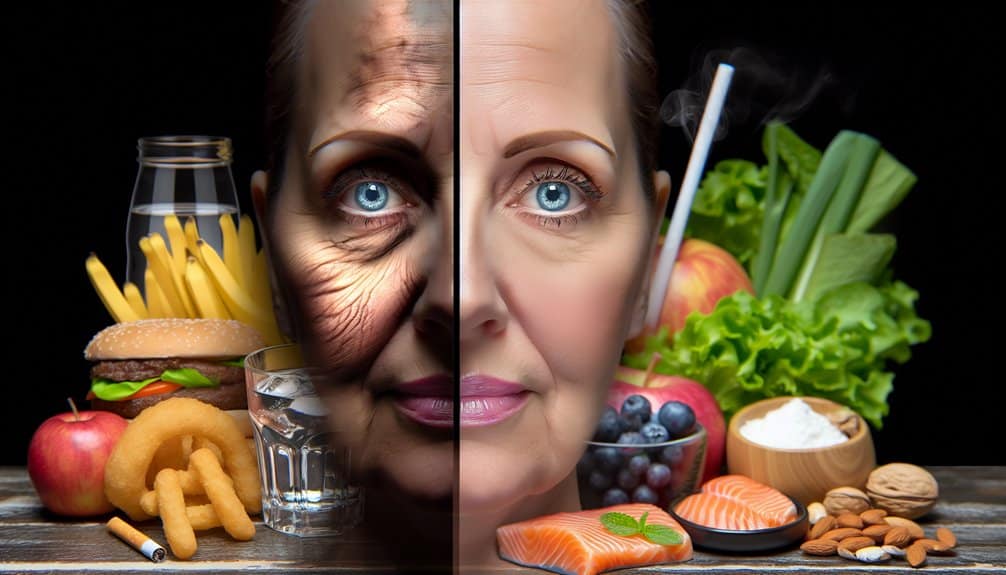
When you think about skin aging, you probably focus on sun exposure and genetics, but your diet exerts a continuous biochemical impact on collagen integrity, elastin function, and cellular repair. High-glycemic foods, oxidized fats, and micronutrient deficiencies can accelerate wrinkle formation through glycation, oxidative stress, and chronic low-grade inflammation. At the same time, specific nutrients and dietary patterns can measurably slow these pathways—raising important questions about what’s on your plate each day.
Key Takeaways
- High sugar and refined carbs accelerate skin aging by promoting glycation, which stiffens collagen and elastin, causing earlier wrinkles and loss of elasticity.
- Antioxidant-rich foods (vitamins A, C, E, polyphenols) help neutralize oxidative stress, protecting collagen and slowing wrinkle formation.
- Pro-inflammatory diets high in processed meats, trans fats, and added sugars increase systemic inflammation, degrading collagen and deepening wrinkles.
- Adequate protein and healthy fats, especially omega-3s, support collagen production, skin barrier integrity, moisture retention, and firmness.
- Mediterranean-style, plant-forward eating patterns with stable blood sugar and good hydration are linked to improved skin elasticity and delayed visible aging.
The Science of Skin Aging: Collagen, Elastin, and Cellular Damage
Although skin aging is influenced by genetics and environmental exposure, its core biological drivers center on progressive disruption of the dermal extracellular matrix—especially the quantity, quality, and organization of collagen and elastin—alongside cumulative cellular and DNA damage. As you age, fibroblasts exhibit reduced proliferative capacity and impaired collagen synthesis, leading to fragmented, disorganized fibrils and diminished tensile strength. Elastin production is largely completed early in life; subsequent damage and defective repair yield elastotic, nonfunctional fibers that impair recoil and promote wrinkle formation. In parallel, targeted nutritional strategies that support cell renewal and antioxidant defenses may help preserve extracellular matrix integrity and modestly slow visible skin aging.
Concurrently, mitochondrial dysfunction, elevated reactive oxygen species, and impaired antioxidant defenses accelerate lipid, protein, and nucleic acid injury. DNA lesions, including double-strand breaks and telomere attrition, trigger cellular senescence, paracrine inflammation, and matrix-degrading enzyme upregulation, further degrading dermal architecture.
Sugar, Glycation, and How Sweet Foods Speed Up Wrinkle Formation
Paradoxically, one of the most pervasive accelerants of skin aging is something you ingest daily: sugar, via a process called glycation. When you consume excess sugar, the glycation process causes glucose and fructose to bind non‑enzymatically to dermal proteins, especially collagen and elastin. These reactions form advanced glycation end products (AGEs), which stiffen collagen fibers, reduce elasticity, and impair normal tissue remodeling.
As AGEs accumulate, your skin’s matrix becomes more brittle, leading to fine lines, deeper wrinkles, and a sallow, uneven texture. High-glycemic diets that frequently satisfy sweet cravings perpetuate elevated blood glucose, accelerating AGE formation. Clinically, this translates into earlier and more pronounced photoaging patterns, delayed wound healing, and diminished responsiveness to topical anti-aging interventions.
Oxidative Stress: Free Radicals, Antioxidants, and Skin Integrity
When it comes to diet-driven skin aging, oxidative stress is the central mechanism linking what you eat to how quickly your skin structure breaks down. Reactive oxygen species (ROS), generated by UV exposure, pollution, and high-glycemic or ultra-processed foods, accelerate oxidative damage to collagen, elastin, and cellular lipids. Over time, you see reduced dermal elasticity, impaired wound healing, and earlier wrinkle formation. Dietary antioxidants provide critical skin protection by neutralizing ROS and stabilizing cellular membranes. They also modulate inflammatory signaling and matrix metalloproteinases that degrade collagen. Among these, vitamins A, C, and E are proven dietary antioxidants with established physiological effects, while many polyphenol-rich foods show antioxidant activity mainly in vitro.
| Dietary Factor | Primary Effect on Skin Integrity |
|---|---|
| Vitamin C, E | Scavenge ROS, support collagen synthesis |
| Polyphenols | Reduce inflammation, UV-induced oxidative damage |
| Carotenoids | Improve photoprotection, stabilize membranes |
| Excess alcohol | Depletes antioxidants, worsens oxidative stress |
Healthy Fats and the Skin Barrier: Omega-3s, Omega-6s, and Moisture Retention
Even with ideal antioxidant intake, the skin’s barrier function depends heavily on the quality and balance of dietary fats—especially omega-3 and omega-6 polyunsaturated fatty acids that are incorporated into epidermal cell membranes and the stratum corneum lipid matrix. When you consume adequate omega 3 sources (e.g., fatty fish, algae oil, flaxseed) alongside physiologic omega-6 intake, you support ceramide synthesis, reduce transepidermal water loss, and preserve skin elasticity. An imbalanced pattern—high omega-6, low omega-3—amplifies pro‑inflammatory mediators that degrade barrier lipids and accentuate dryness, roughness, and fine lines. Regularly including fatty fish and plant-based omega‑3 sources like walnuts, flaxseed, and chia seeds can further bolster barrier lipids and moisture retention from within.
- Imagine your skin retaining moisture all day, not just after applying cream
- Feel the tightness ease as barrier lipids normalize
- Notice makeup sitting smoothly instead of catching on flakes
- Sense irritation calming as inflammation mediators decline
- Envision long-term wrinkle depth progressing more slowly
Protein, Amino Acids, and Building Blocks for Firm, Resilient Skin
While lipids regulate how well the skin holds water, its firmness and tensile strength depend largely on the quantity and quality of protein you consume. Dermal collagen, elastin, and structural glycoproteins are all peptide-based, so inadequate intake directly impairs repair capacity and accelerates wrinkle formation. You should prioritize complete protein sources that deliver all essential amino acids, especially glycine, proline, lysine, and arginine, which are critical for collagen fibrillogenesis and cross-link integrity. High-biological-value proteins from eggs, dairy, fish, and lean meats provide ideal amino acid benefits, while complementary plant proteins (legumes plus grains or seeds) can achieve similar profiles. Sufficient daily protein—roughly 1.0–1.2 g/kg body weight for healthy adults—supports dermal matrix turnover, preserves skin thickness, and maintains biomechanical resilience. Choosing protein sources within a generally healthy diet also supports long-term skin health by promoting overall metabolic and cardiovascular wellness.
Hydration, Electrolytes, and Their Role in Skin Plumpness and Texture
You can’t optimize skin firmness and texture without addressing systemic hydration status and electrolyte balance. Adequate water intake supports dermal extracellular matrix hydration, enhancing turgor and surface smoothness, while insufficient intake’s associated with increased transepidermal water loss and fine wrinkling. At the same time, dietary electrolytes—especially sodium, potassium, and magnesium—help regulate osmotic gradients and fluid distribution, which influence cutaneous plumpness, barrier integrity, and overall skin homeostasis.
Hydration for Supple Skin
Although topical products often get most of the attention, ideal skin plumpness and texture depend fundamentally on systemic hydration and electrolyte balance, which regulate water content within the epidermis and dermis. You need consistent fluid intake from diverse hydration sources—primarily water, but also high-water foods like cucumbers, berries, and citrus—to sustain dermal turgor and optimize moisture retention. Adequate hydration supports glycosaminoglycans (especially hyaluronic acid), which bind water and preserve extracellular matrix volume, reducing the appearance of fine lines.
Dehydration, even mild, increases transepidermal water loss, making skin appear dull, rough, and more line-prone. You can monitor hydration targets by urine color and frequency, then adjust fluids accordingly.
- Imagine smoother morning skin
- Feel less tightness after cleansing
- Notice makeup sitting more evenly
- See healthier light reflection
- Experience greater confidence in bare skin
Electrolytes and Skin Balance
Electrolytes—primarily sodium, potassium, chloride, magnesium, and calcium—govern how water is distributed across cellular and extracellular compartments, directly influencing skin turgor, texture, and barrier integrity. When sodium balance is disrupted, you’re more prone to dermal water retention or dehydration, both of which impair collagen architecture and amplify fine lines. Excessive dietary sodium can also compromise microcirculation, worsening dullness.
Adequate potassium counteracts sodium’s osmotic effects and supports keratinocyte function. You’ll optimize potassium sources by emphasizing fruits (bananas, oranges), vegetables (leafy greens, sweet potatoes), and legumes, which help maintain intracellular hydration. Magnesium and calcium act as cofactors in lipid synthesis and epidermal differentiation, stabilizing the stratum corneum. Together, balanced electrolytes sustain cutaneous hydration gradients, preserving plumpness, resilience, and a smoother skin surface.
Micronutrients That Matter: Vitamins, Minerals, and Youthful Skin Support
As you move beyond hydration, you’ll need to evaluate how specific micronutrients modulate oxidative stress and extracellular matrix integrity in the skin. Antioxidant vitamins such as C, E, and A can attenuate UV-induced free radical damage, support barrier function, and influence epidermal differentiation. Key minerals, including zinc, copper, and selenium, also serve as enzymatic cofactors for collagen synthesis and cross-linking, directly impacting dermal firmness and resilience. Among these, vitamin E’s role as a fat-soluble antioxidant is particularly important, with natural alpha-tocopherol helping protect cell membranes from oxidative damage that accelerates wrinkle formation.
Antioxidant Vitamins for Skin
While macronutrients supply energy and structural substrates, it’s antioxidant vitamins that play a pivotal role in defending skin against oxidative stress–driven aging. You rely on Vitamin C for collagen cross-linking, Skin Brightening, and regeneration of oxidized Vitamin E within cell membranes. Vitamin E stabilizes lipid bilayers, limiting UV-induced peroxidation and enhancing cutaneous Healing Properties. Beta Carotene contributes to endogenous Sun Protection by quenching singlet oxygen and supporting epithelial integrity.
To harness these effects, you need consistent intake of Antioxidant rich Foods that deliver synergistic Skin Nourishment.
- Imagine fine lines softening as dermal damage slows
- Feel confidence returning with more even-toned skin
- Sense resilience when your face tolerates daily stressors
- Notice faster recovery after irritant or procedure exposure
- Experience long-term preservation of a youthful skin phenotype
Minerals Supporting Collagen Production
Antioxidant vitamins limit oxidative injury, but mineral status ultimately governs how effectively collagen fibers are synthesized, cross-linked, and repaired. You rely on adequate zinc, copper, selenium, and silica to maintain dermal matrix integrity.
Zinc benefits collagen by acting as a cofactor for DNA and RNA polymerases, supporting fibroblast proliferation, and facilitating protein synthesis during wound healing. It also modulates matrix metalloproteinases, limiting collagen degradation induced by UV exposure.
The copper role is central to collagen maturation: it’s required for lysyl oxidase, the enzyme that catalyzes oxidative deamination of lysine residues, enabling stable cross-link formation between collagen and elastin. Suboptimal copper or zinc status impairs tensile strength, slows repair, and may accelerate wrinkle formation despite adequate vitamin intake.
Inflammatory Foods, Gut Health, and Their Impact on Premature Aging
Though skin aging is often framed around sun exposure and oxidative stress, pro‑inflammatory dietary patterns and disrupted gut homeostasis are equally important accelerants of premature aging. When you consume inflammatory diets—rich in refined sugars, processed meats, and trans fats—you upregulate systemic cytokines (TNF‑α, IL‑6) that impair dermal fibroblast function, degrade collagen, and intensify wrinkle depth. Simultaneously, a disturbed gut microbiome promotes increased intestinal permeability, endotoxemia, and chronic low‑grade inflammation that visibly manifests as dullness, erythema, and textural irregularities. Over time, such chronic inflammation‑driven nutrient imbalance can contribute to broader patterns of micronutrient undernutrition, further compromising skin repair capacity and resilience.
- You notice fine lines deepening faster than expected
- Your skin looks persistently inflamed despite topical care
- Breakouts and redness flare with ultra‑processed meals
- You feel “puffy” and fatigued after sugar‑dense foods
- You worry your daily choices are scripting premature aging
Dietary Patterns Linked to Smoother Skin: Mediterranean, Plant-Forward, and Beyond
Even as genetics and UV exposure set the baseline for how your skin ages, dietary patterns such as the Mediterranean, DASH, and other plant‑forward frameworks provide quantifiable benefits for dermal integrity and wrinkle prevention. The Mediterranean diet emphasizes plant based foods, omega 3 sources, and colorful fruits that deliver antioxidant rich meals, enhancing collagen stability and reducing oxidative damage. You’re also supporting nutrient diversity and hydration strategies that maintain barrier function and dermal turgor. Long‑term adherence to the Mediterranean diet has also been linked to reduced systemic inflammation and improved cardiometabolic health, which indirectly supports healthier, more resilient skin over time.
| Pattern / Focus | Key Features | Skin‑Relevant Effects |
|---|---|---|
| Mediterranean diet | Olive oil, fish, vegetable importance | Fewer wrinkles, reduced photoaging |
| Plant‑forward | Legumes, nuts, whole grains | Enhanced elasticity, less inflammation |
| Structured eating | Healthy snacks, aligned meal timing, water | More stable glycemia, improved radiance |
Everyday Eating Habits That Help Minimize Fine Lines and Deep Wrinkles
While prescription topicals and in‑office procedures can modify photoaging, your daily eating pattern exerts a constant, low‑grade influence on collagen turnover, glycation, and dermal inflammation that directly shapes fine lines and wrinkle depth. You’ll get more benefit from consistent, modest upgrades than from sporadic “perfect” days. Anchor each meal in protein (≥20 g), polyphenol‑rich plants, and omega‑3 fats, using deliberate superfoods selection—berries, leafy greens, green tea, extra‑virgin olive oil, and fatty fish—shown to attenuate oxidative stress and matrix metalloproteinase activity. Building meals around mostly unprocessed plant foods and healthy fats aligns with broader dietary guidelines that also support systemic and skin health.
Strategic meal timing also matters: avoid frequent high‑sugar snacks that spike insulin and accelerate collagen cross‑linking.
- Imagine crow’s feet softening as glycation slows
- Feel empowered by each stable, protein‑rich breakfast
- Sense post‑meal calm instead of inflammatory crash
- Picture deeper wrinkles filling as dermal matrix stabilizes
- Know daily choices quietly remodel your skin’s future



Add Comment