
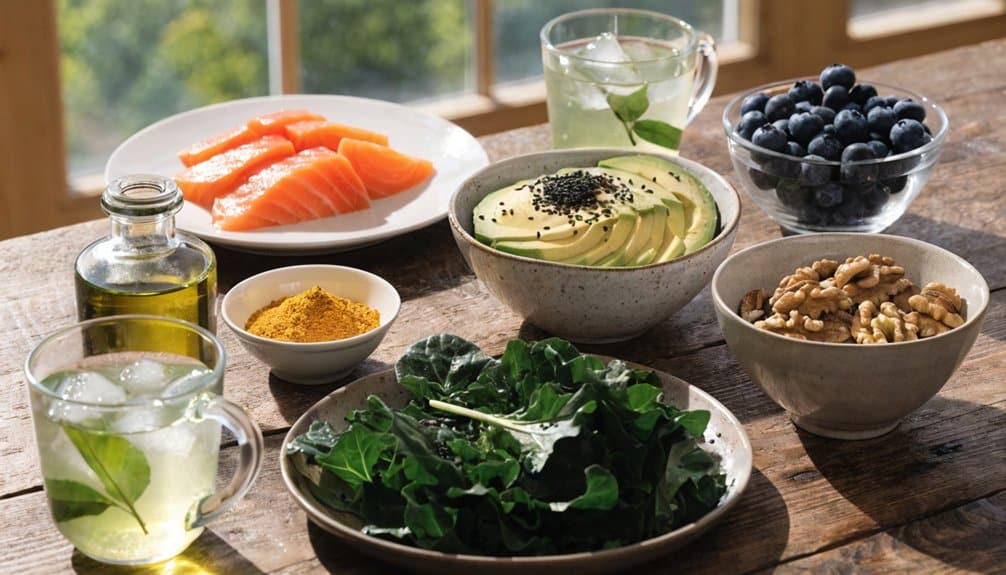
Research suggests that diets rich in plant foods are linked to lower rates of chronic disease and longer lifespan. If you want your daily meals to support healthier skin, steadier energy, and better aging overall, the foods you choose matter. Nutrient-dense options like berries, leafy greens, olive oil, beans, and fatty fish can help reduce inflammation and oxidative stress. A few simple additions can make a measurable difference—and some work better than you’d expect.
Key Takeaways
- Eat berries like blueberries and strawberries daily for antioxidants, fiber, and vitamin C that help protect cells from aging.
- Add dark leafy greens, cruciferous vegetables, and tomatoes for vitamins, fiber, and compounds that support skin, immunity, and cellular health.
- Choose healthy fats from extra-virgin olive oil, avocado, olives, and fatty fish to reduce inflammation and support heart and skin health.
- Include walnuts, almonds, chia seeds, flax seeds, lentils, and chickpeas for healthy fats, protein, fiber, and better blood sugar balance.
- Focus on whole, minimally processed foods and rotate colorful produce daily for broader nutrients linked to long-term healthy aging.
What Makes a Food Anti-Aging

Although no single food can stop aging, foods are often considered “anti-aging” when they consistently supply nutrients and bioactive compounds that help protect your cells, lower chronic inflammation, and support repair processes throughout the body. In practice, you’re looking for foods rich in protein, fiber, unsaturated fats, vitamins, minerals, and phytochemicals. These compounds help limit oxidative stress, support collagen formation, stabilize blood sugar, and maintain muscle, bone, brain, and cardiovascular health. Anti-aging foods also improve nutrient absorption by providing fat for fat-soluble vitamins or by pairing nutrients that work together, like vitamin C with iron. Just as important, they tend to be minimally processed and regularly eaten, so you can consistently meet needs linked to healthy aging rather than relying on isolated supplements or short-term dietary trends. Consistently choosing such nutrient-dense foods is a powerful way to support long-term health maintenance and enhance overall well-being as you age.
Best Anti-Aging Fruits and Berries
Among the most useful anti-aging foods, fruits and berries stand out because they pack vitamins, fiber, water, and polyphenols into foods that are easy to eat consistently. You’ll get vitamin C for collagen support, anthocyanins for oxidative stress defense, and potassium for healthier blood pressure.
| Food | Key nutrients | Easy use |
|---|---|---|
| Blueberries | Anthocyanins, fiber | Oatmeal |
| Strawberries | Vitamin C, manganese | Yogurt |
| Oranges | Vitamin C, water | Snack |
| Pomegranate | Polyphenols, potassium | Salad |
Choose berries often, but rotate citrus, pomegranate, and kiwi to diversify antioxidants. Add frozen berries to superfood smoothies, or pair them with Greek yogurt for antioxidant rich desserts. Aim for one to two servings daily, preferably whole fruit, so you’ll maximize fiber, fullness, and glycemic control with minimal effort. Regular intake of vitamin C-rich fruits like oranges and strawberries helps maintain adequate plasma vitamin C levels that support immune function and antioxidant defenses.
Best Anti-Aging Vegetables
When you’re building an anti-aging diet, vegetables deserve daily priority because they deliver fiber, carotenoids, vitamin C, folate, potassium, and thousands of phytochemicals with relatively few calories. To support healthy aging, fill your plate with dark leafy greens, tomatoes, carrots, peppers, beets, and sweet potatoes regularly. Cruciferous options like broccoli, Brussels sprouts, cauliflower, and cabbage stand out because they provide glucosinolates, compounds linked with cellular protection. Tomatoes supply lycopene, while orange vegetables contribute beta-carotene for skin and immune support. Leafy greens help you meet folate, magnesium, and vitamin K needs. Fermented vegetables such as sauerkraut or kimchi can also add beneficial microbes for gut health. For the most nutritional coverage, rotate colors, buy seasonally, and aim to include at least two different vegetables at lunch and dinner daily. Pairing these vegetables with sources of omega-3 fats such as fatty fish, walnuts, or flaxseed can further support heart, brain, and eye health as you age.
Healthy Fats for Skin and Energy

Vegetables lay the groundwork for healthy aging, and the fats you pair with them help your body absorb carotenoids, vitamin E, and other fat-soluble compounds that support skin, brain function, and steady energy. Choose fats that deliver monounsaturated and polyunsaturated lipids while keeping preparation simple. Alpha-tocopherol-rich foods can help you reach recommended intakes and maintain optimal serum vitamin E levels linked with reduced risk of neurological issues and chronic disease.
- Extra-virgin olive oil supports heart health and helps your skin barrier stay resilient.
- Avocado benefits include potassium, fiber, and oleic acid for satiety and smoother skin.
- Fatty fish are top omega 3 sources, supplying EPA and DHA linked to lower inflammation.
- Olives add polyphenols and healthy fat to salads, grain bowls, and cooked vegetables.
- Plain yogurt or kefir adds fat plus protein, helping you stay energized between meals.
Use moderate portions, since even healthy fats are calorie-dense. Pair them with colorful produce daily.
Best Anti-Aging Nuts, Seeds, and Beans
Because they pack fiber, plant protein, minerals, and protective phytochemicals into small servings, nuts, seeds, and beans can be some of the most effective foods for healthy aging. You’ll get standout nut benefits from walnuts for omega-3s, almonds for vitamin E, and pistachios for carotenoids and potassium. Strong seed sources include chia and flax for ALA fats, plus pumpkin seeds for magnesium and zinc. Among bean varieties, lentils, black beans, and chickpeas support steadier blood sugar, digestive health, and muscle maintenance through fiber, folate, iron, and protein. These foods may also help lower LDL cholesterol and reduce inflammation, two factors linked with aging-related disease risk. For more complete nutrition, think regarding smart nut pairings, such as almonds with beans or walnuts alongside lentils. In addition to these benefits, nuts, seeds, and beans contribute key nutrients like vitamin E and plant polyphenols, which are part of the body’s broader dietary antioxidant defense system even though only certain vitamins have proven antioxidant effects in humans.
Easy Ways to Eat Anti-Aging Foods Daily
Nuts, seeds, and beans work best for healthy aging if you can eat them consistently, and the simplest approach is to build anti-aging foods into meals you already make. Focus on fiber, plant protein, vitamin E, magnesium, and polyphenols, which support blood sugar control, skin health, and lower oxidative stress. Because nutrients like vitamin C, vitamin E, and glutathione act as physiological antioxidants, regularly eating plant foods rich in these compounds may help counter everyday oxidative stress linked with aging.
- Stir chia or ground flax into oatmeal or yogurt.
- Add black beans or lentils to soups, tacos, or salads.
- Use walnuts, pumpkin seeds, or edamame as snack options.
- Blend berries, spinach, and almond butter into smoothie recipes.
- Swap refined sides for bean salads or hummus with vegetables.
You don’t need a perfect plan. If you prep portions ahead, keep shelf-stable staples visible, and pair them with familiar foods, you’ll eat these nutrients more regularly.
Frequently Asked Questions
Can Anti-Aging Foods Replace Skincare Products or Cosmetic Treatments?
No, you can’t rely on anti-aging foods alone to replace skincare products or cosmetic treatments. You’ll get support through nutrient absorption, but your best results usually come from a holistic approach combining diet, skincare, and procedures.
How Long Before Anti-Aging Foods Show Visible Skin Benefits?
You’ll usually notice changes in 6–12 weeks: better hydration, smoother texture, brighter tone. Your visible results timeline depends on consistency, overall diet, and skin health indicators like elasticity, moisture retention, and reduced inflammation.
Are Anti-Aging Foods Safe With Common Medications or Supplements?
Yes, they’re usually safe, but you should check for drug interactions, especially with blood thinners, thyroid meds, or high-dose supplements. Some foods can alter nutrient absorption, so review combinations with your clinician or pharmacist.
Do Cooking Methods Reduce Anti-Aging Nutrients in These Foods?
Yes, some cooking methods do reduce anti-aging nutrients, but you can limit losses. Choose gentle Cooking techniques like steaming or microwaving for better Nutrient preservation, and avoid prolonged high heat, excess water, and repeated reheating.
Are Anti-Aging Diets Effective for Different Ages and Skin Types?
Yes, you’ll see age specific benefits from anti-aging diets, but results vary with skin type considerations. Nutrient-dense foods support collagen, hydration, and repair, so you’ll benefit by tailoring antioxidants, healthy fats, and protein to your needs.

Add Comment